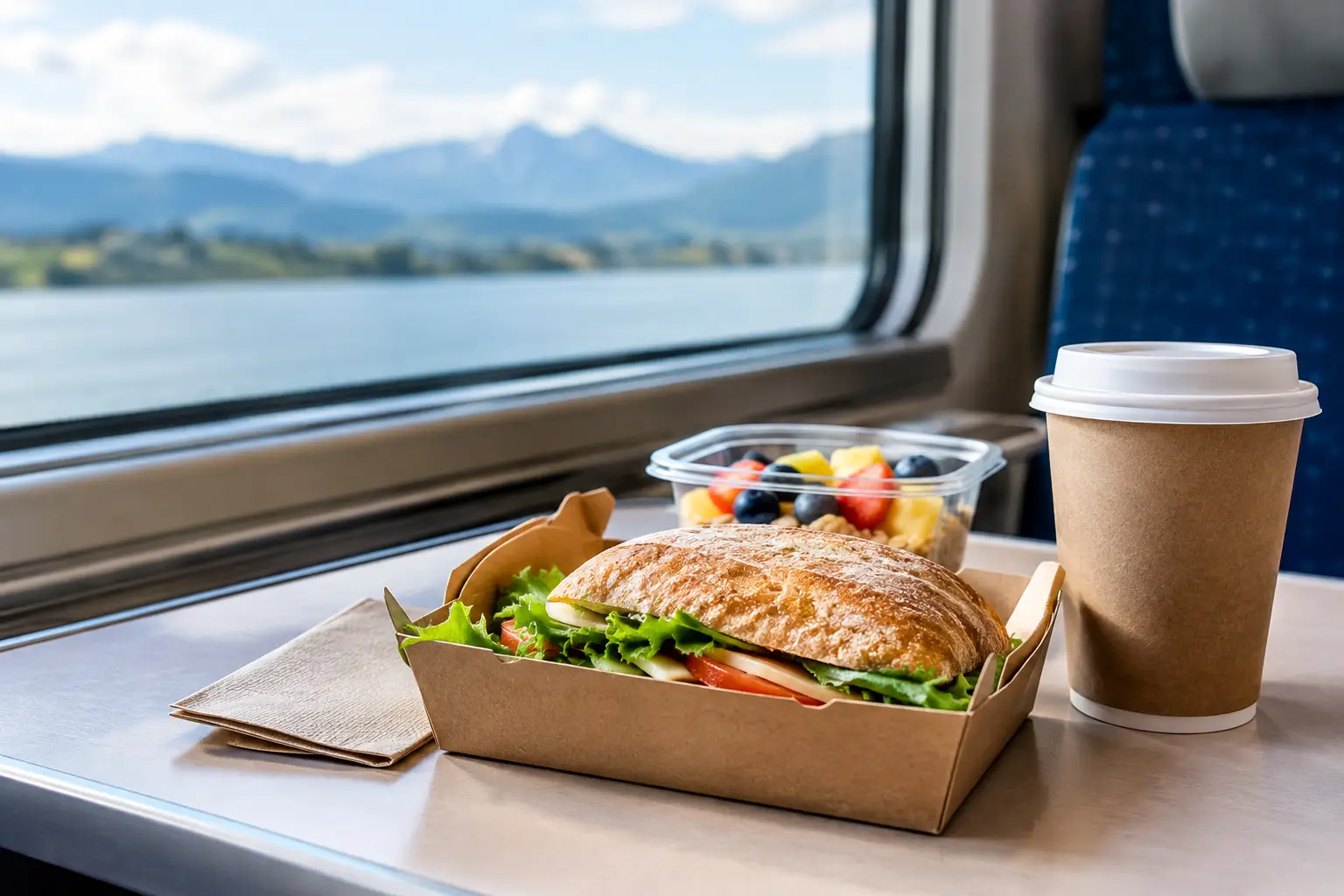
A good travel meal does more than quiet a hungry stomach. It gives a long platform wait, an early departure, or a few hours in a train seat a little more comfort. This guide to cafe travel meals is for the traveler who would rather begin with a real breakfast or a satisfying lunch than settle for whatever happens to be available after the doors close.
Travel food does not need to be fancy, but it should be chosen with care. The best option is fresh enough to feel like a proper meal, portable enough to manage with one hand, and packed thoughtfully enough to survive the trip without becoming a crumb-covered mess in your bag.
Start With the Length and Rhythm of Your Trip
The right cafe travel meal depends less on the clock than on the shape of the day ahead. A 40-minute ride to New London calls for something different than a morning journey to Boston or a connection-filled trip south. Think about when you last ate, when you are likely to have another reliable meal, and whether you will have room to sit and enjoy it before boarding.
For an early train, breakfast should carry you beyond the first stop. A sandwich with egg, cheese, and a protein is usually more sustaining than a pastry alone. Fresh-baked goods are a lovely companion to coffee, especially for a short ride, but they work best as part of breakfast rather than the whole plan when lunch is still hours away.
For midday travel, a made-to-order sandwich can be the sensible choice. It is familiar, filling, and generally easy to wrap and eat without a full table. If your train leaves close to lunch, ordering ahead can make the difference between eating calmly on the platform and rushing aboard with a meal you barely had time to choose.
Choose Foods That Travel Well
The most memorable cafe meals often arrive on a plate, but a travel meal has a different job. It needs to hold together. Bread should be sturdy enough to protect the filling, sauces should be moderate, and anything crunchy or delicate should be packed separately when possible.
A breakfast sandwich, bagel sandwich, wrap, or neatly cut deli sandwich tends to travel better than an open-faced meal or anything requiring a knife and fork. If you know you will be eating on the train, ask for it wrapped securely and consider whether you would prefer it cut in half. That small detail makes a meal much easier to share with a child or manage between a coffee and a phone.
There is room for a treat, too. A cookie, muffin, brownie, or other baked good is easy to tuck away for later, when the scenery has settled into a long stretch and a little something sweet sounds just right. The trade-off is that flaky pastries and heavily frosted desserts can be less forgiving in a backpack. Pack them flat, not upright beside a water bottle.
Build a Meal, Not a Pile of Snacks
Station snack shelves are useful, particularly when time is short. Still, a handful of snack foods can leave you hungry again before the next stop. A better approach is to build around one substantial item, then add one or two practical extras.
For example, pair a breakfast sandwich with fruit or a small baked good for a long morning. Pair a lunch sandwich with a simple snack for the afternoon. If you are traveling with family, one hearty item per person plus a few shareable snacks can be easier and more economical than trying to assemble separate meals from a dozen small packages.
Coffee deserves the same consideration. A fresh cup before boarding is one of the small pleasures of train travel, especially in a station with history in its walls. But a large hot drink may not be the right companion for a crowded car, a child in the next seat, or a day when you expect plenty of movement. In those cases, choose a size you can finish before departure, bring a cold drink for the ride, or make sure the lid is secure before you head to the platform.
Time Your Cafe Stop With a Little Breathing Room
Train travel has a way of making five minutes feel like thirty seconds. Platforms change, parking takes longer than expected, and a child may suddenly need the restroom just as your order is called. Give yourself enough time to order, receive your meal, and get settled before boarding begins.
For travelers departing Mystic, arriving 20 to 30 minutes ahead is often a comfortable target, especially if you want a fresh meal rather than a grab-and-go snack. On busier weekends and holiday periods, add more time. You do not need to spend that extra time standing anxiously with your bag. A station cafe is exactly the sort of place where waiting can feel like part of the outing.
At Mystic Depot Roasters, the old 1905 station makes that pause feel especially fitting: coffee roasting, breakfast on the way, and a train schedule just beyond the door. It is a practical stop, but it is also a chance to enjoy the kind of welcome that makes a trip feel as though it has already begun.
Pack for the Seat You Actually Have
Most travelers picture themselves eating at a roomy table. Sometimes that happens. Other times, the tray table is occupied by a laptop, the seatmate is sleeping, or the train is moving through a curve just as you unwrap lunch. Pack with the less glamorous version of the journey in mind.
Keep napkins, utensils, and a small packet of wipes within easy reach. Put the meal near the top of your bag, not underneath a sweater, book, charger, and souvenir. If you are carrying hot food, avoid sealing it inside a tightly packed insulated bag for too long. Steam can soften bread, and what was crisp when it left the cafe may be soggy by the time you find your seat.
For a longer ride, separate food into two moments. Eat the main meal within an hour or so of departure, then save the baked good or snack for later. This keeps the meal from feeling hurried and gives you something to look forward to without repeatedly opening your bag in search of food.
Consider Your Fellow Travelers
A considerate travel meal is better for everyone. Strong aromas, drippy sauces, loose salads, and loud packaging can turn a peaceful car into an awkward lunchroom. This does not mean your food must be boring. It simply means choosing something you can enjoy without needing a cleanup crew afterward.
If you are traveling with children, familiar foods and easy portions are your friends. Bring more napkins than you think you need, and avoid handing out several sugary snacks at once just before a long stretch with no chance to run around. A sandwich now and a cookie later is often a happier arrangement for the whole family.
Travelers with dietary needs should ask questions before ordering rather than hoping a packed meal will work out later. A good cafe can help identify ingredients, suggest a suitable option, or package items separately when that makes sense. The earlier you ask, the more choices you are likely to have.
Let the Meal Belong to the Journey
There is no rule that says a travel meal must be eaten in transit. If you have time, sit down before boarding. Watch travelers come and go, enjoy your coffee while it is hot, and carry a smaller snack for the ride. For some people, that is the better choice, especially on short trips where balancing lunch in a moving seat feels more like a chore than a pleasure.
On the other hand, eating on the train can be part of the fun. A well-wrapped sandwich, a favorite drink, and the view passing beyond the window make an ordinary ride feel pleasantly unhurried. The answer depends on your schedule, your appetite, and whether you are traveling to get somewhere quickly or traveling to enjoy the whole day.
Before you leave for the platform, take one last look in your bag: ticket, phone, charger, water, and the meal you will be glad you chose when the train starts to roll. That little bit of preparation leaves more room for the good part – the first sip of coffee, the first glimpse of the shoreline, and the welcome feeling of being on your way.