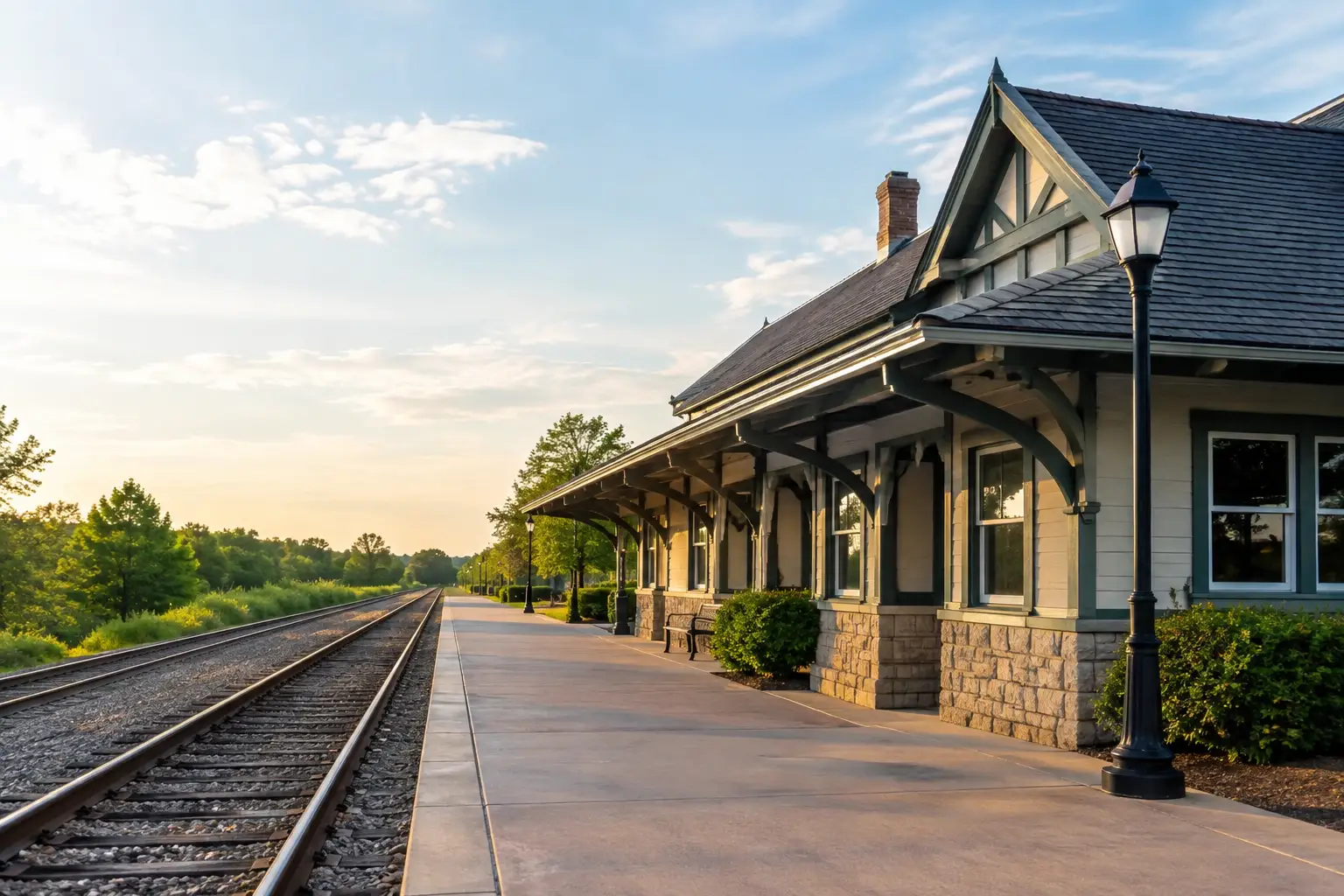
A train station is built for movement, but the best ones also give a town a place to gather. Mystic station history 1905 begins with that simple purpose: welcoming people in, sending them on their way, and standing as a familiar sight through generations of changing daily life. More than a century later, the depot remains part of Mystic’s rhythm, connecting passengers, neighbors, commuters, and visitors to the center of town.
The station is not a museum piece behind glass. It is a working landmark with the sounds, arrivals, and small human moments that have always made rail travel memorable. That is what makes its history worth knowing. The building carries the character of an earlier railroad era, while continuing to serve people with places to go and reasons to stop.
Mystic Station History 1905 Starts With Connection
When Mystic’s station was built in 1905, railroads were essential to how New England communities connected with one another. Before highways made car travel routine, the railroad was a primary route for work, commerce, family visits, and longer journeys. A station was practical infrastructure, certainly, but it was also a town’s front door.
For Mystic, that mattered. The village had long been shaped by the water, shipbuilding, trade, and the energy of people coming and going. Rail service added another layer of connection. Residents could travel beyond the shoreline more easily, while visitors could arrive close to Mystic’s businesses, homes, and harbor life.
A depot from this period had to do more than provide shelter from a cold coastal morning. It gave travelers a recognizable place to wait, meet, ask directions, and begin the next part of their day. Its design and location helped make the railroad feel present in the life of the town rather than distant from it.
That role can be easy to overlook now. We are used to travel being private and fast, often experienced from a car. Train stations ask something different of us. They create a shared pause. You wait beside strangers, greet the person getting off the train, carry a bag across the platform, or grab breakfast before an early departure. Those ordinary rituals are part of what has kept the Mystic station meaningful.
A Building That Saw Mystic Change
Since 1905, Mystic has changed in ways its original passengers could not have predicted. Automobiles changed how people moved around southeastern Connecticut. Tourism became a larger part of the local economy. Neighborhoods, businesses, and travel habits shifted with each generation.
Yet the station’s location has continued to make sense. It remains close to the village experience that many people come to Mystic to enjoy: walkable streets, local shops, the river, and a sense that the community has held onto its identity. For rail passengers, stepping off at Mystic is not the same as arriving at an anonymous stop beside a highway. The depot offers an immediate sense of place.
Historic buildings earn their place in a community by adapting without losing their soul. That balance is never automatic. A building can be preserved but feel closed off from everyday life. Or it can be altered so heavily that the story it carries becomes hard to see. The strongest restoration work respects both needs: protecting the character people recognize while finding a useful purpose for the present.
That is especially true for a station. A depot should still feel welcoming. It should still offer a reason to come inside, whether someone is catching a train, meeting a friend, or taking a quiet break between errands. Keeping a historic station alive means giving it a role in the day-to-day life of the town.
Preservation Is About Use, Not Just Appearance
The restored 1905 Mystic Amtrak station offers a good reminder that preservation is not only about saving old materials. It is about keeping a building connected to the people around it. A well-cared-for station lets the past remain visible without requiring anyone to stop living in the present.
There are trade-offs, of course. Older buildings come with limits that newer construction does not. Their layouts, maintenance needs, and historic features require thought and patience. But those details are also the point. They are why a visit feels different from a quick stop in a standard storefront.
The depot’s continued use gives residents something increasingly rare: a local landmark that is both recognizable and useful. It belongs in family routines, visitor itineraries, travel plans, and neighborhood conversations. That kind of familiarity cannot be manufactured overnight.
The Human Side of a Railroad Landmark
The biggest stories connected to stations are often small ones. A parent sending a student off for a trip. A couple arriving for a weekend in Mystic. A worker heading home at the end of a long shift. A local meeting an out-of-town guest on the platform.
Those moments have changed in their details since 1905, but the feeling remains familiar. Stations are places of anticipation. Someone is always arriving, leaving, or waiting for news of a schedule. They hold both the excitement of travel and the comfort of returning home.
That is why the depot means so much to people who may never board a train there. It is part of the visual memory of Mystic. For longtime residents, it can recall years of errands, reunions, commutes, and visits. For newcomers, it helps explain why the village feels distinct from places where older buildings were replaced rather than renewed.
The station also reminds us that local history is not separate from daily life. It is in the buildings we enter, the routes we take, and the places where we recognize familiar faces. When a landmark remains active, history becomes something you experience rather than something you only read about.
A New Gathering Place in a Familiar Depot
Today, the building’s next chapter is rooted in hospitality. Mystic Depot Roasters operates inside the restored station, pairing the easy comfort of coffee, breakfast, lunch, baked goods, and a friendly hello with a setting that has welcomed travelers for more than a century.
For passengers, that can mean a practical stop before boarding or a welcome bite after arrival. For locals, it can mean the kind of dependable gathering place where a usual order is remembered and a quick coffee can turn into a conversation. Visitors get something equally valuable: a chance to enjoy Mystic in a place that is genuinely part of its story.
The setting matters, but it does not replace good service. A historic building earns affection when it feels cared for in the present tense. Fresh coffee, a made-to-order meal, a comfortable place to pause, and people who are glad you came in all help carry the depot’s purpose forward.
Why the Station Still Matters
Mystic’s 1905 station has endured because it represents more than a date on a plaque. It represents the community’s ability to keep a beloved landmark useful, welcoming, and connected to the people around it. The trains still bring movement. The depot still offers a point of arrival.
The next time you pass through Mystic, take a moment to look beyond the platform. Notice the building that has watched generations come and go, then step inside and make a small part of its continuing story your own.