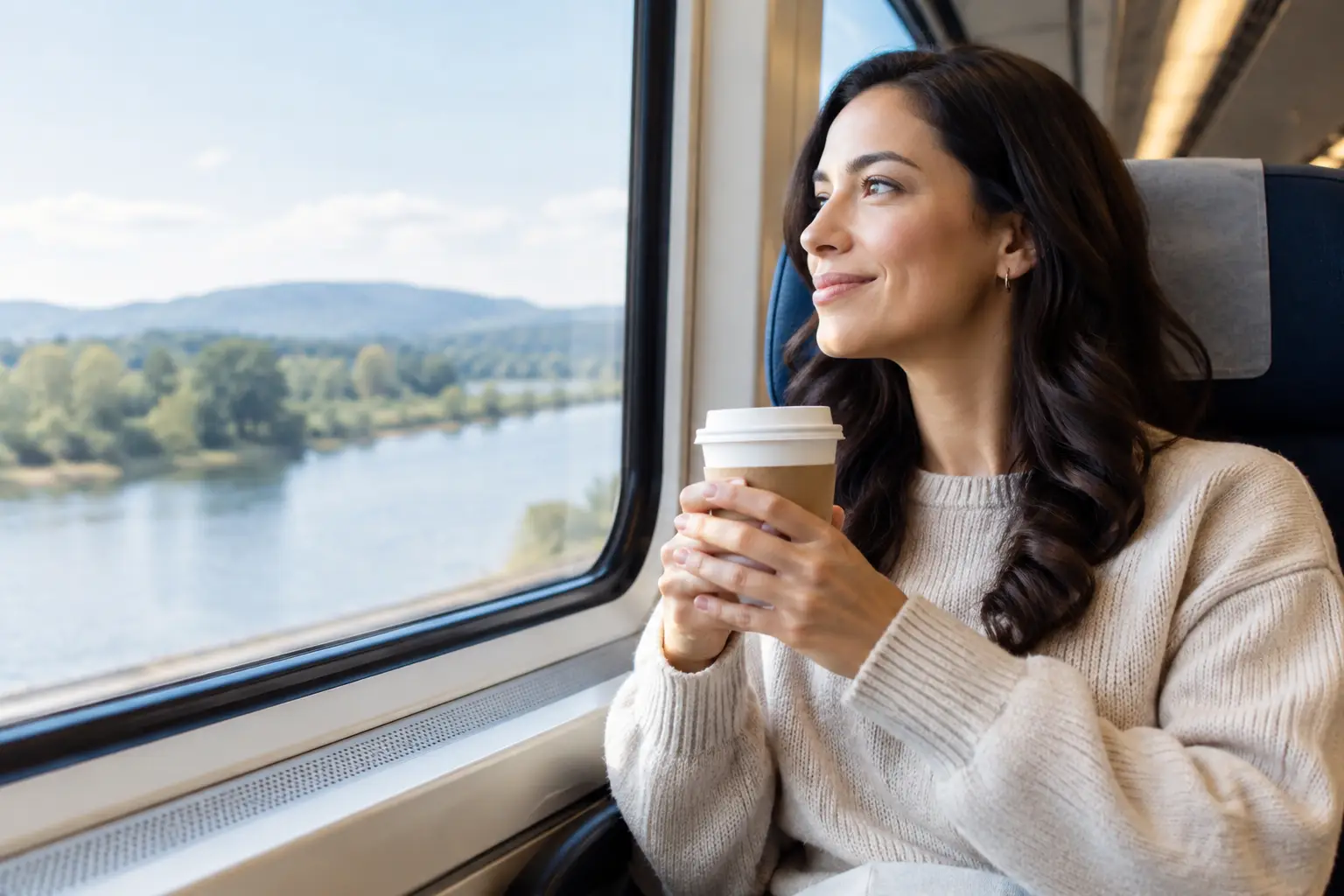
A coffee run can set the tone for the whole journey, especially when your train day starts before sunrise or includes a long connection. Amtrak coffee policies are generally friendly to travelers who want to bring their own beverage, but a little planning makes the experience much more comfortable for you and everyone sharing the car.
For passengers leaving from Mystic, that planning can begin in a place built around the simple pleasure of coffee and rail travel. The old station is still a working part of town life, with commuters, visitors, families, and day-trippers all moving through its doors. Whether you pick up a fresh cup before boarding or rely on onboard service, knowing the basics helps you travel with fewer surprises.
Amtrak Coffee Policies: Can You Bring Your Own?
In most cases, yes. Amtrak permits passengers to bring their own food and nonalcoholic beverages onboard for personal consumption. That means a cup of coffee purchased before boarding, an iced latte, a bottled cold brew, or coffee packed in a travel mug is ordinarily fine to bring to your seat.
The practical part matters as much as the policy. Train movement can be gentle one minute and bumpy the next, particularly when the train is slowing, switching tracks, or passing through curves. A cup with a secure lid is the wise choice. If you prefer a reusable tumbler, make sure it closes tightly and fits where you plan to keep it. An open paper cup may be manageable for a short ride, but it is not much fun when you are balancing a bag, a ticket, and a laptop at the same time.
Keep your drink with you and be considerate of nearby passengers. A strong coffee aroma is usually welcome, but spills, sticky tables, and cups left behind are not. If you are traveling with children, a cooler drink or a well-sealed container can save everyone from an unwanted wardrobe change before New Haven.
What about coffee made at home?
Coffee brewed at home is generally treated the same way as a drink bought at a café. Pack it in a leak-resistant thermos, allow a little room at the top for movement, and keep it upright. A thermos is especially useful for early departures, when you may want a second cup long before the café car is open or staffed.
There is one common-sense exception: do not bring anything that creates a safety issue. A bulky coffee maker, an electric heating device, or anything that needs to be plugged in and operated onboard is not a good fit for train travel. Bring the finished beverage instead.
Buying Coffee Onboard Amtrak
Many Amtrak routes offer food and beverage service, often through a Café car. Depending on the train, you may find regular coffee and other hot or cold drinks available alongside sandwiches, snacks, and breakfast items. Some longer-distance services have different dining arrangements, while service on shorter corridors can be more limited.
That variability is why the onboard coffee should be viewed as a convenient option, not the only plan for a traveler with a particular order in mind. Café-car offerings, hours, and availability can vary by route, trip length, staffing, and supply. A favorite flavored drink, a specific milk choice, or a pastry you were hoping to pair with coffee may not be available when you board.
If the café car is part of your plan, listen for announcements and check your train information before walking through several cars. On a busy train, it also helps to avoid heading there just as passengers are settling in or lining up for a meal. Bring a card or another accepted form of cashless payment, since onboard food service often has its own payment practices and those practices can change.
For some travelers, the café car is one of the small pleasures of taking the train: stretching your legs, looking out the window from a different car, and returning to your seat with something warm. For others, especially commuters trying to work or families managing a tight schedule, arriving with coffee in hand is the easier choice. Both are perfectly reasonable.
Travel Mugs, Lids, and Courtesy on the Train
There is no need to overthink the cup, but the right one makes a noticeable difference. A travel mug with a locking lid is best for a longer trip. An insulated tumbler works well for iced coffee. If you buy a hot drink in a disposable cup, ask for a lid and hold it when the train is entering or leaving a station.
Try not to use a seatback pocket or a narrow ledge as your coffee holder. Those spaces were not designed for a full cup, and one sudden stop can turn a pleasant ride into a cleanup project. Keep a napkin handy, place the cup on a stable surface when available, and take it with you if you leave your seat.
The same neighborly rule applies to trash. Carry out what you can, or use the proper receptacle in the car. A clean seat and table are a kindness to the next passenger, and they make the train feel more like the relaxed, civilized way to travel that it ought to be.
Coffee, Alcohol, and What Not to Confuse
Coffee itself is straightforward. Alcohol is different. Amtrak has specific rules about alcoholic beverages brought from outside the train, and passengers should not assume that a drink packed for a picnic may be opened anywhere onboard.
In general, personal alcohol is limited to private sleeping-car accommodations for passengers who have reserved them. It is not for consumption in coach seating, lounges, or other public areas of the train. Alcohol purchased through Amtrak service may be handled differently, but crew instructions always apply.
This distinction is worth remembering when coffee drinks are involved. A plain latte or cold brew is one thing. A canned hard coffee, coffee cocktail, or other alcoholic beverage falls under alcohol rules, even if it looks like a coffee drink. When in doubt, save it for the proper setting or ask an Amtrak crew member.
Make the Station Stop Part of the Trip
A train schedule leaves little room for wandering back and forth across town once boarding begins. Arrive with enough time to find the platform, keep an eye on announcements, and settle your coffee before the train pulls in. At a station such as Mystic, that extra few minutes can be the difference between a rushed paper cup and a calm start to the ride.
Mystic Depot Roasters was created with that rhythm in mind: a restored 1905 depot where travelers and neighbors can pause for craft coffee, breakfast, lunch, or a fresh-baked treat before the next train arrives. If you are picking up a drink to go, let the team know you are boarding. A secure lid and a sensible recommendation for the time of day go a long way.
If your train is delayed, a station café can also turn waiting time into something more pleasant. Rather than standing on the platform hungry and watching the clock, you can have a proper cup of coffee and a bite to eat close to your departure point. Just stay attentive to service updates and give yourself time to return to the platform.
A Few Situations Where the Answer Depends
Not every coffee question has one neat answer. A short Northeast Regional trip and an overnight long-distance journey call for different planning. A traveler in business class or a private room may have different service expectations than someone in coach. A passenger managing dietary needs may be better served by bringing a preferred milk, snack, or prepared drink rather than counting on a particular onboard selection.
Likewise, Amtrak can update food-service details, payment methods, and onboard procedures. Before a trip, review the information associated with your specific route and follow directions from train staff. Their job is to keep the journey safe, orderly, and comfortable for everyone aboard.
The best coffee policy is the one that lets you enjoy the ride without creating a mess, a delay, or a headache. Choose a well-lidded cup, give yourself time at the station, and settle into the window seat while the shoreline rolls by.