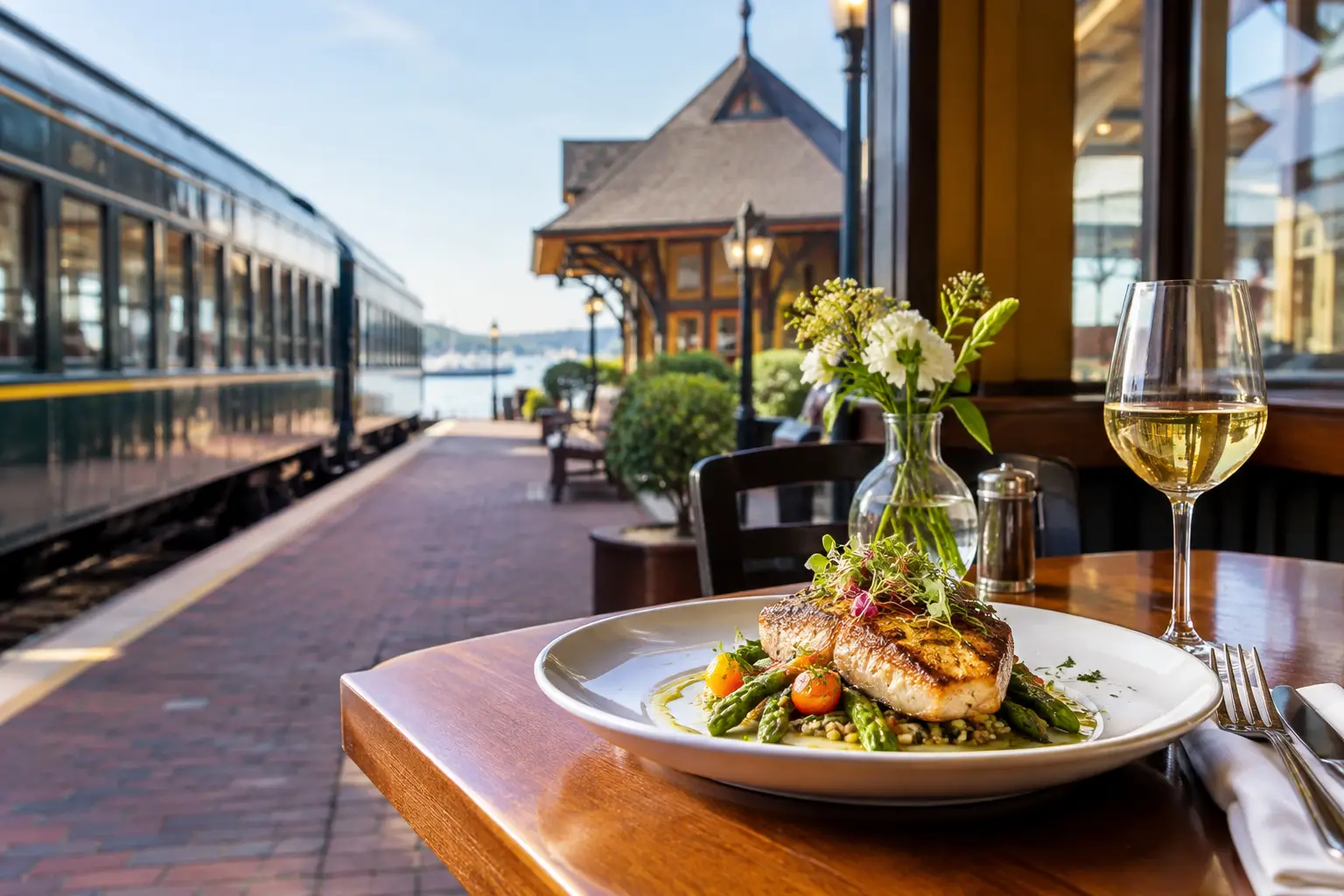
The best station meals have always done more than fill a gap between arrivals and departures. They offer a warm cup on a cold platform morning, a familiar sandwich before a long ride, and a place to settle in when a travel day runs ahead or behind schedule. This guide to historic station dining is for anyone who wants to enjoy that experience fully, whether you are catching an Amtrak train in Mystic, meeting a friend for breakfast, or building a little extra time into a shoreline day trip.
A restored depot has a rhythm all its own. The clock matters, but so does the creak of old floors, the view toward the tracks, and the feeling that generations of travelers have paused in the same place. Good station dining respects that history while making the practical parts easy: fresh food, good coffee, a welcoming table, and service that understands you may have a train to catch.
What Makes Historic Station Dining Different
Dining in a historic train station is not the same as grabbing food at a highway exit. A depot was built around movement and connection. People arrived with luggage, waited for loved ones, headed off to work, and came home again. When a station is restored as a café or restaurant, those layers of everyday life remain part of the experience.
That is why the setting matters. Original architectural details, high ceilings, old waiting-room proportions, and views of active rail lines can make an ordinary breakfast feel tied to a particular town. In Mystic, the station itself is part of the visit. The restored 1905 building is a local landmark, but it is also a working stop where commuters, visitors, and neighbors cross paths throughout the day.
The trade-off is that historic spaces were not designed around the expectations of a modern chain restaurant. Seating may feel more intimate. The building may have its own quirks. On a busy weekend or around a popular train time, the room can be lively. For many guests, that is exactly the point. You are not eating in a copy-and-paste dining room. You are spending time in a place with a real past and an active present.
Plan Your Station Meal Around the Day
The easiest way to enjoy a meal at a depot is to decide what role it plays in your plans. If you are traveling, think of it as part of the journey rather than an errand squeezed in before boarding. If you are visiting Mystic, let it be the comfortable starting point or landing place for the day.
Before a train: keep it simple and leave room for timing
Before departure, choose something satisfying that does not require you to watch the clock anxiously. A made-to-order breakfast sandwich, a pastry with coffee, or a lunch item you can take along can make the wait more pleasant without creating a rush.
Give yourself more time than you think you need. Train schedules can change, parking can take a few minutes, and a historic station is worth looking at rather than racing through. Arriving early also means you can order calmly, find your platform, and enjoy the small pleasures of travel that disappear when every minute is accounted for.
If you need to carry food onto the train, choose items that travel well and are easy to manage in a seat. Keep drinks secure, napkins handy, and your hands free when it is time to gather your bags. Convenience matters, but it does not have to mean settling for something forgettable.
After arrival: give yourself a soft landing
A station café is often most welcome just after a trip. Maybe you need a proper lunch after a morning of connections. Maybe you are meeting family who arrived from out of town. Maybe the weather has turned, and a warm drink is a better first stop than wandering straight into the next plan.
This is the time to slow down. Ask what is fresh from the kitchen or bakery, choose a table if one is available, and look around. A good post-train meal gives everyone a moment to reset before heading toward downtown Mystic, the waterfront, local shops, or home.
Make the depot part of a local day
For residents, historic station dining can be refreshingly ordinary in the best way. It is a place to begin a workday with coffee, meet a neighbor at lunch, pick up a treat, or bring visiting relatives somewhere that feels distinctly local. The landmark is special, but it does not need to be reserved for special occasions.
For visitors, pairing breakfast or lunch with a stroll through Mystic makes practical sense. Start with a meal near the tracks, then leave the car parked for a while and enjoy the town at walking pace. On the way back, a coffee, dessert, or small snack can turn the station into the final stop of the day rather than simply the place you pass through.
How to Order Well in a Historic Depot
The best order depends on your schedule, appetite, and company. There is no single right choice, but a few habits help. First, match your meal to your timing. If boarding is close, a quick coffee and baked good may be the wiser call. If you have an hour with a friend, a made-to-order breakfast or lunch is worth settling in for.
Second, let the menu do what a neighborhood menu should do: offer comfort and flexibility. Station dining works especially well when there is something for the early commuter, the hungry family, the person who wants a fresh sandwich, and the traveler looking for one excellent cup of coffee. Familiar food is not boring when it is prepared with care and served by people who are glad you came in.
At Mystic Depot Roasters, that balance is part of the welcome: specialty coffee alongside breakfast, lunch, fresh-baked goods, nostalgic snacks, and a few thoughtful gifts for the road. A station stop can be as quick as a coffee refill or as leisurely as a meal shared at the table.
If you are ordering for a group, keep the station setting in mind. Families may appreciate choosing a mix of dependable favorites and a sweet treat to share. Friends meeting between appointments may prefer coffee and lighter fare. Travelers with luggage will be grateful for an order that is easy to carry. The goal is not to make dining complicated. It is to let the meal fit the day you actually have.
The Small Details That Make the Experience Better
Historic station dining is at its best when guests and hosts both make room for a little neighborliness. If you are lingering at a table during a busy period, be mindful of people arriving from the platform. If you need to get moving, let the staff know you are working around a departure time. A little clear communication goes a long way.
It also helps to look up from the phone now and then. Notice the building materials, the old station layout, the activity outside, and the mix of people in the room. A commuter with a regular order, a family headed to a museum, and a couple beginning a weekend away may all be sharing the same space. That mix is part of the charm no modern food court can manufacture.
Do not overlook the retail shelf or bakery case, either. A locally meaningful gift, a nostalgic snack, or something sweet for later is a simple way to carry the visit beyond the station doors. These are not just last-minute purchases. They are the kinds of small things that make a trip feel remembered.
A Guide to Historic Station Dining With Respect for Place
The strongest historic station restaurants do not treat their building as a backdrop. They care for it as part of the community’s shared story. Preservation gives old depots a useful future, but that future depends on people using them: having breakfast before work, bringing a grandchild for a cookie, meeting a friend, or waiting for the train with a good cup in hand.
That is also why local support matters. Choosing an independent station café helps keep a landmark active and cared for. It supports the everyday hospitality that makes a town feel lived in rather than merely visited. The value is not only in the meal. It is in the fact that the lights are on, the coffee is brewing, and a historic gathering place still has people coming through its doors.
Next time you find yourself near the tracks, leave a little room in the schedule. Order something you will enjoy, settle into the station for a few minutes, and let the trip begin or end with the kind of welcome people have always hoped to find at a depot.