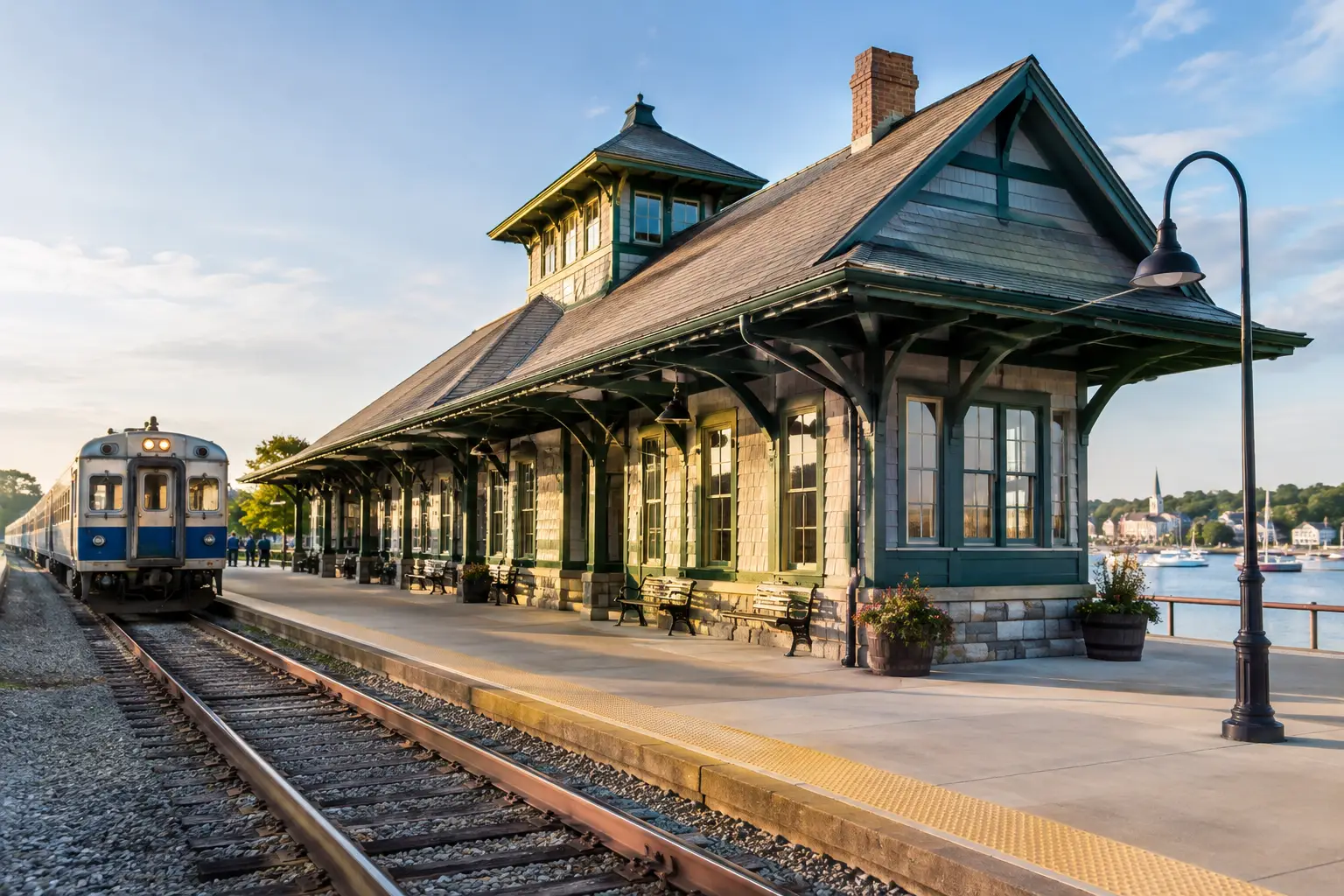
A train station is built for movement, but the best ones also give a town a reason to pause. In Mystic, historic station restoration has protected more than old brick, tall windows, and a familiar platform. It has kept a piece of everyday community life in service – a place where travelers arrive, neighbors meet, and the story of the shoreline remains visible.
The restored 1905 station is a reminder that preservation works best when a building still has a purpose. A depot should not feel sealed behind a rope or reserved only for special occasions. It should welcome someone hurrying to catch a train, a family looking for breakfast, a local stopping in for coffee, or a visitor hoping to experience the Mystic they have heard about.
Why Historic Station Restoration Matters
Old stations carry a particular kind of local memory. They were built around arrivals and departures, reunions and first jobs, weekday commutes and long-awaited vacations. Even when the schedules change and the town grows, the building can hold onto those human connections.
That is why restoring a station is different from simply renovating an old structure. The work calls for respect for original details, but it also requires honest choices about what a modern building needs. Heat, accessibility, food service, lighting, plumbing, safety systems, and reliable daily maintenance all matter. A building cannot serve its community for another century if it is only beautiful from the sidewalk.
In a town like Mystic, that balance is especially meaningful. Visitors come for maritime history, village streets, the river, and the feeling that there is still a real place behind the postcard. Local residents want the same thing, along with a dependable spot that fits naturally into their routines. A cared-for station can do both.
A Depot Needs a New Daily Purpose
Preservation is strongest when it is lived in. A station that remains active has people noticing a leaking window, appreciating the craftsmanship in the woodwork, sharing stories about the building, and bringing friends through the door. Daily use creates stewardship in a way that a vacant landmark rarely can.
At Mystic Depot Roasters, the station’s next chapter includes freshly roasted coffee, made-to-order breakfast and lunch, baked goods, familiar snacks, and the small comforts that make travel days easier. That kind of use does not compete with the history of the depot. It helps explain why the building deserves care.
There is a practical side, too. Adaptive reuse gives historic buildings an economic role in the present. Rather than relying only on occasional events or outside support, a busy café and gathering place can help keep a landmark open, maintained, and part of the local rhythm. The trade-off is that a working business needs room for equipment, storage, seating, and efficient service. Good restoration plans account for those needs without sanding away the building’s character.
Character Is More Than a Look
It is easy to reduce historic character to a few decorative details. But a meaningful restoration protects the feeling of the place as well as the visible materials. The scale of the rooms, the relationship to the tracks, the windows that bring in morning light, and the sense of anticipation around the platform all contribute to what makes a station feel like a station.
That does not mean every corner must be frozen in time. In fact, trying to recreate a past that never truly existed can make a building feel more like a set than a community landmark. Honest updates are often the better choice. New systems can be quietly modern. Accessible entrances can welcome more people. A food counter can sit comfortably alongside historic architecture when it is designed with care and proportion.
The goal is not perfection. The goal is continuity.
The Community Benefits of a Restored Station
A preserved depot gives residents and visitors a shared reference point. It makes directions easier, creates a natural meeting place, and offers a first impression that feels specific to Mystic rather than interchangeable with any other town along the rail line.
For rail passengers, a station café adds a simple but valuable convenience. There is time for a hot coffee before boarding, a breakfast sandwich for the ride, or a lunch after arrival. For commuters, the same stop can become part of a weekly routine. For hospitality workers, retirees, families, and day-trippers, it can be an easygoing place to sit down without needing a grand occasion.
Those everyday moments matter because they keep local history from becoming distant. A child who has breakfast in a former depot may ask about the tracks outside. A visitor waiting for a train may notice the age of the building and learn that it has served Mystic for generations. A regular may begin to see a familiar station not merely as a backdrop, but as something worth protecting.
There is also a civic benefit in keeping landmarks useful. When a town invests attention in a historic structure, it signals that its past has value and that its future does not have to erase it. That pride often reaches beyond one address. It encourages care for nearby storefronts, public spaces, sidewalks, and the local businesses that give a village center its life.
Historic Station Restoration Takes Ongoing Care
The restoration itself is only the beginning. Historic buildings ask for patience, close attention, and a willingness to handle the unglamorous work. Roofs need inspection. Old masonry needs appropriate repair. Wood trim needs protection from New England weather. Mechanical systems need updating before a small problem becomes a costly interruption.
There can be surprises, especially in buildings that have stood through more than a century of changing uses. Original materials may require specialized work. Modern code requirements can shape every decision. A repair that seems straightforward may take longer because the right approach is not always the fastest one.
That is part of the responsibility of caring for a landmark. Shortcuts can be tempting, particularly when budgets are tight, but the wrong materials or poorly planned changes can create problems that last for decades. Thoughtful preservation takes time because it considers what the building needs now and what it will need next.
For guests, much of this work may be invisible, and that is often a sign that it has been done well. The room feels welcoming. The doors work. The heat is on when the shoreline wind is sharp. The historic details remain part of the experience without getting in the way of a good meal, a friendly conversation, or a train to catch.
A Welcome That Carries the Story Forward
A restored station should never feel precious in the wrong way. Its history is not meant to make people feel they must whisper or hurry along. It should make the welcome warmer.
That is the real promise of historic station restoration: a beloved building can honor where a town has been while making room for the people who are here now. Stop in before the train, settle in over breakfast, bring an out-of-town guest, or simply take a moment to look up at the details that have watched Mystic change. The depot is still doing what it was built to do – bringing people together.