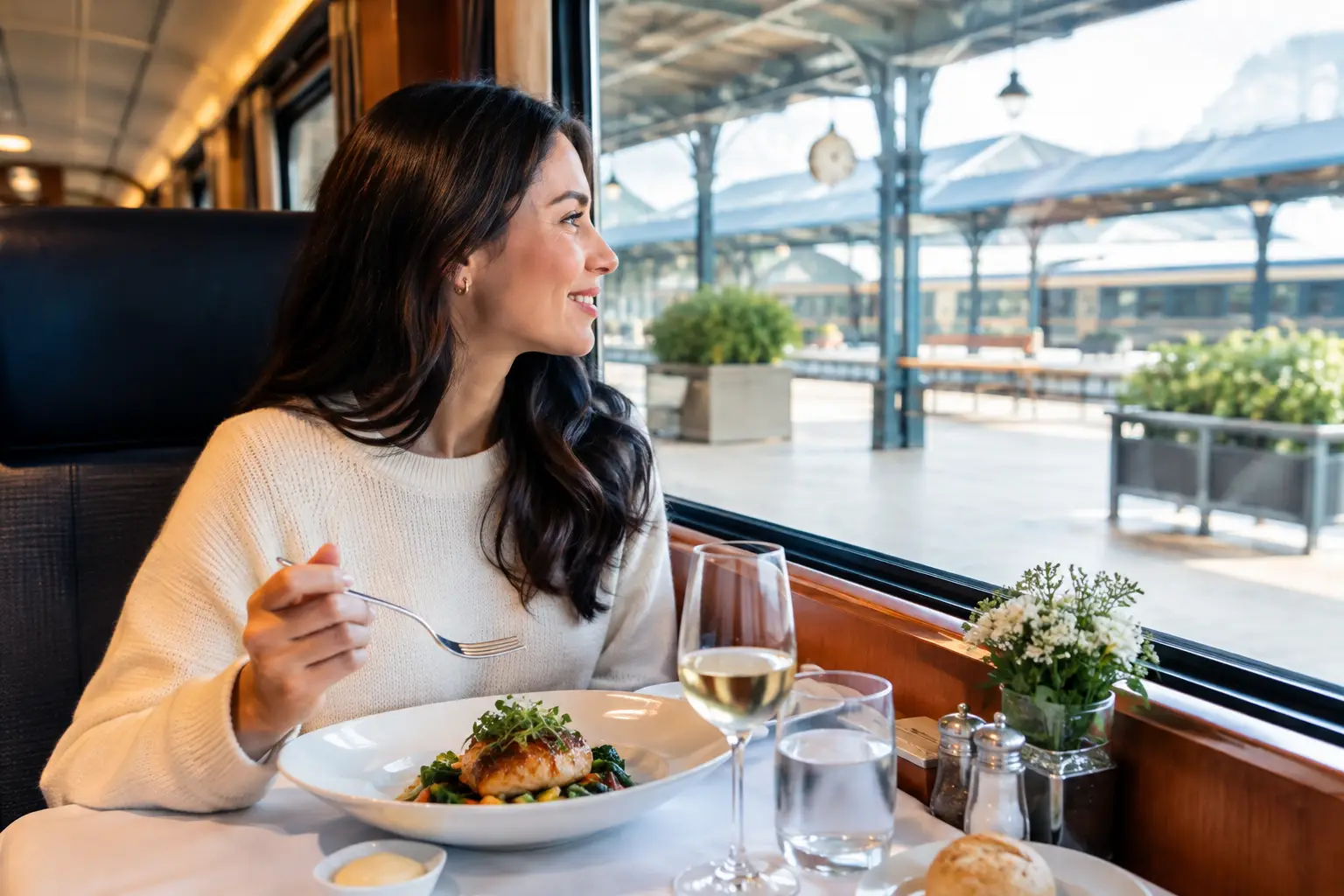
A train station can be a place to rush through, watching the clock with a paper cup in hand. Or it can be a place to settle in for a real breakfast, meet a friend over coffee, pick up lunch for the ride, and feel that the trip has already begun. That is the simple pleasure of rail dining: it gives travelers and neighbors a reason to enjoy the station instead of merely passing through it.
For a town like Mystic, where the waterfront, local shops, and railroad have long helped shape daily life, a station café belongs naturally in the landscape. Good food near the tracks is practical, certainly. It is also part of the welcome.
Rail dining is more than food near a platform
The phrase rail dining may bring to mind white tablecloths in old railroad dining cars, silver service, and a long journey through the countryside. There is charm in that picture, but the modern version is often more relaxed and useful. It might be a fresh coffee before an early train, a breakfast sandwich wrapped for the platform, a warm baked good after a rainy arrival, or a made-to-order lunch shared at a table before an afternoon of sightseeing.
What makes it rail dining is the connection between the food and the journey. The meal is not an interruption to travel. It is part of the rhythm of travel.
That distinction matters. Airports often leave people hunting for whatever is quickest. Highway stops can feel anonymous and hurried. A station restaurant has the chance to offer something different: food with a sense of place, served at a pace that understands both the commuter checking departure times and the visitor with a free afternoon ahead.
A station should serve the people who use it
The best station dining works for more than one kind of guest. A weekday commuter may need coffee made quickly and exactly the way they like it. A family headed to New York may need an easy breakfast that everyone can agree on. A visitor arriving in Mystic may want their first meal to feel distinctly local, not like something found at every exit along the interstate.
That range calls for an all-day approach. Breakfast has to be dependable, with the familiar comfort of eggs, sandwiches, pastries, and a proper cup of coffee. Lunch should be satisfying without being fussy or too slow for a departure board. Snacks, cold drinks, and sweets matter too, especially when a delay stretches longer than expected or a traveler realizes they did not pack enough for the ride.
Reasonable prices are part of the hospitality. Travel already comes with enough small expenses. A station café earns trust when guests can get a fresh meal without feeling as though convenience has become a penalty.
There is a balance to strike, of course. A full sit-down meal can be lovely when time allows, but it does not suit every traveler. Grab-and-go choices are essential near a platform. The strongest rail dining offers both: food worth sitting down for and food that can make the train with you.
Timing is part of the service
Station hospitality runs on a different clock. Some guests are early because they never want to risk missing a train. Others walk in with only a few minutes to spare. Staff need to be welcoming without slowing down the person who has one eye on the tracks.
A clear menu, familiar choices, and efficient preparation make a real difference. So does a little human awareness. Asking when a train departs is not just friendly conversation. It helps a café guide a guest toward the right choice, whether that is a leisurely plate at a table or a sandwich ready to carry.
For regulars, the rhythm becomes even more personal. There is comfort in being greeted by name, having a usual coffee remembered, and knowing there is a good breakfast waiting before the workday begins. That is how a station becomes part of a community rather than just a transit point.
Historic stations add something a new building cannot
There is no need to pretend every old station was glamorous. Railroad travel has always involved schedules, weather, luggage, waiting, and the occasional change of plans. But historic stations carry the marks of countless arrivals and departures. Their brickwork, waiting rooms, ticket windows, and platforms hold stories even when no one can name every person who passed through.
When those buildings are cared for and put back into everyday use, the result is more than preservation. It is a living landmark. A meal or coffee inside a restored station gives people a practical way to spend time in the space. The building stays active, visible, and connected to the town around it.
At Mystic Depot Roasters, operating in the restored 1905 Mystic Amtrak station, that setting is not a backdrop added for effect. It is the heart of the experience. A locally roasted coffee or made-to-order breakfast tastes even better when it comes with the sound and movement of an active station just outside.
Historic character does not excuse poor service or tired food. In fact, it raises the standard. Guests may come in because the setting is memorable, but they return because the coffee is good, the meal is fresh, and the welcome feels genuine.
The best rail dining reflects the town beyond the tracks
A station is often one of the first places a visitor sees, which gives the food served there a special responsibility. It can offer a first impression of the community: hurried and generic, or warm, capable, and proud of where it is.
In Mystic, that means a station café should feel connected to the shoreline and the people who live here year-round. It should welcome the couple beginning a weekend getaway as easily as the hospitality worker grabbing breakfast after a shift. It should make room for retirees meeting over coffee, parents with children, and locals who simply enjoy having a familiar place to stop.
The details are usually simple. Fresh-baked goods in the case. A lunch menu with choices that travel well. A few nostalgic treats that make someone smile. Gift items for the person who wants to bring home a small reminder of their visit. None of these things alone creates a destination, but together they make a station feel cared for.
That care extends beyond the counter. Keeping a historic building active supports the life of the neighborhood around it. Travelers have a reason to arrive early or linger after their train. Residents have another place to gather. The station becomes a meeting point again, which is what it was built to be.
A better alternative to travel food that feels like an afterthought
For generations, travelers have learned to lower their expectations around meals on the move. They expect a rushed purchase, a stale pastry, or something selected mostly because it is the only option nearby. Rail dining can challenge that assumption without becoming precious about it.
The goal is not to turn every coffee stop into a formal occasion. It is to make ordinary travel feel a little more civilized. A good muffin still warm from the oven. A sandwich made when it is ordered. Coffee with real attention behind it. A clean table by a window. A friendly suggestion for what to take aboard.
These small things are memorable because they are useful. They give a traveler one less thing to worry about and give a local one more reason to enjoy the station on an ordinary Tuesday.
What to look for when choosing where to eat before a train
If time is tight, proximity matters. A café near the station removes the stress of parking somewhere else, waiting for service, and trying to judge whether there is enough time to get back to the platform. But closeness is only the start.
Look for food that suits the length and style of your trip. A short commute may call for coffee and a pastry. A longer ride is easier with a filling breakfast or lunch packed to go. If you are traveling with children or a group, familiar choices can save time and prevent last-minute negotiations at the counter.
It also helps to choose a place that understands the station schedule. A friendly café cannot control train delays, but it can offer a comfortable place to wait, a second cup of coffee, and a bit of calm when plans shift. That is a form of service worth appreciating.
For visitors, dining at the station can be a smart first or last stop in town. Arrive early enough to eat before setting out toward Mystic’s shops, riverfront, and attractions. Before leaving, take a few minutes to enjoy the building one more time rather than racing to the platform hungry.
A station meal does not need to be elaborate to be special. Sometimes the best part of a trip is simply having a warm cup in your hands, a good bite to eat, and a seat in a place that has welcomed travelers for more than a century.