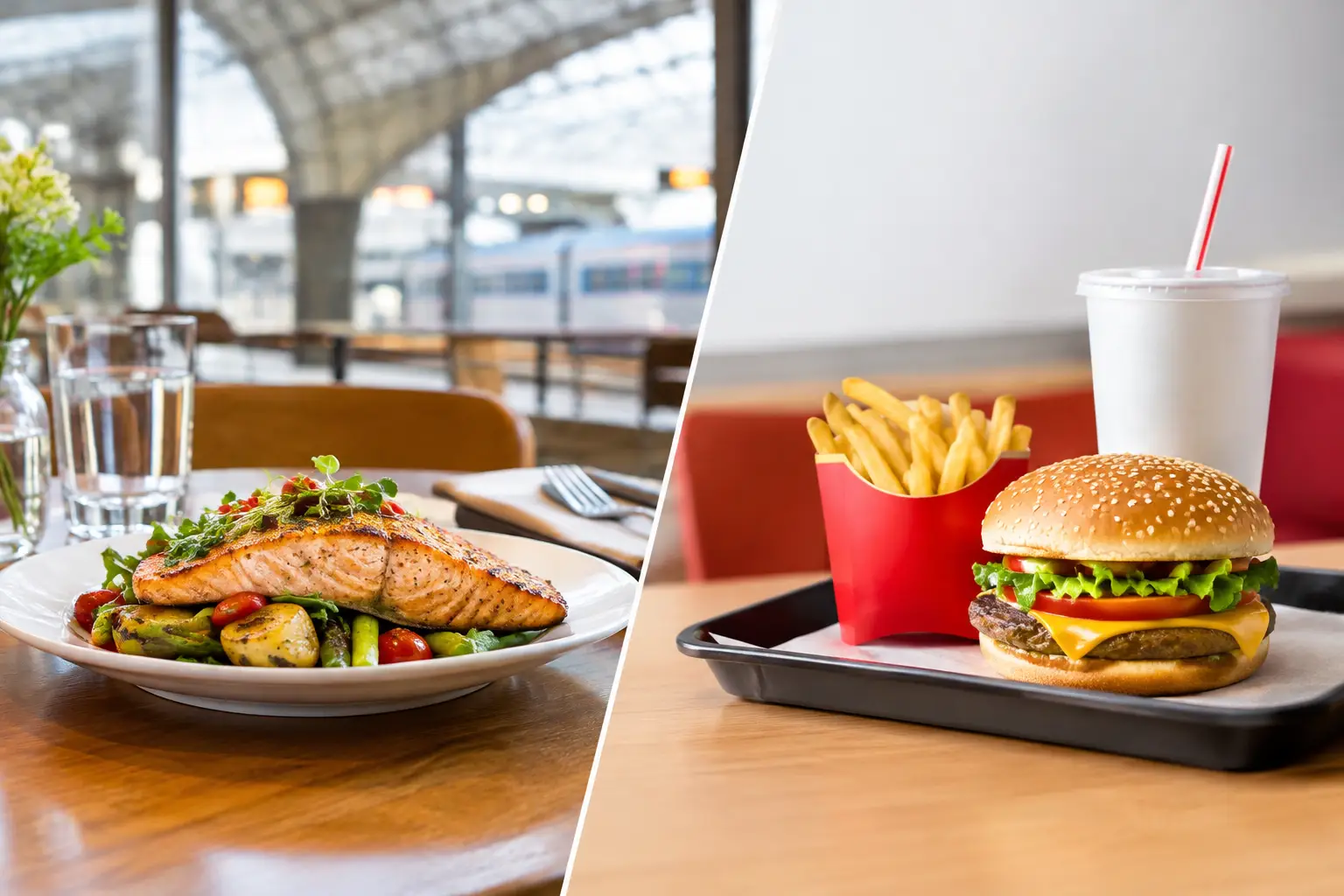
A train pulls in, a family checks the departure board, and someone realizes they have not had coffee since sunrise. That is the moment when station dining versus fast food stops being an abstract choice. Travelers and locals alike need something dependable, reasonably priced, and quick enough to fit a real schedule. But they also deserve better than a meal that feels like an afterthought.
Fast food has earned its place for a reason. It is familiar, predictable, and often available when time is short. Yet a station can offer something more memorable: a fresh breakfast before an early departure, a made-to-order sandwich after a long ride, or a cup of carefully brewed coffee in a building that has welcomed generations of passengers.
Station Dining Versus Fast Food Comes Down to the Experience
The clearest difference is not simply the menu. It is the feeling a guest carries away.
Fast food is built around speed and consistency at a large scale. There is value in knowing what you will get, especially while driving on the highway or trying to feed a hungry crew between activities. For some travelers, that familiar option is exactly right. A quick stop can be the practical choice when every minute matters.
Station dining works best when it respects that same need for efficiency while adding care that cannot be standardized. The coffee is prepared with attention. Breakfast is cooked to order. The person at the counter may ask how your morning is going, point out the platform, or remember that you take your coffee with a little cream. Those details are small, but they change a stop into a welcome.
At a historic station, the setting also has a job to do. A restored waiting room, old brickwork, high windows, and the sound of a passing train give a meal a sense of place. You are not simply grabbing calories before the next item on your itinerary. You are spending a few minutes in the story of the town you came to see.
Convenience Should Not Mean Settling
There is a common assumption that fresh food and good service take too long for a traveler. That can be true at a formal sit-down restaurant, where a meal is meant to unfold slowly. A well-run café is different. It can offer a practical middle ground between a drive-thru and a full dining room.
For the commuter catching an early train, that may mean a hot breakfast sandwich and coffee ready to carry. For the day-tripper arriving in Mystic, it might mean a fresh-baked treat and a chance to get oriented before heading toward the water. For a local on a lunch break, it can be a sandwich that feels made for lunch, not pulled from a warming cabinet.
The best station dining understands the clock. It keeps the menu approachable, the ordering process clear, and the pace moving. It does not ask passengers to choose between eating well and making their train.
That said, there are days when the fastest option wins. If you are traveling with overtired children, delayed by traffic, or staring at a departure board with only a few minutes to spare, a simple grab-and-go item may be all that fits. Good hospitality means meeting people where they are, not judging a practical decision.
Freshness Has a Different Kind of Value
A made-to-order meal is not automatically better just because it takes more effort. The difference shows up in the details: a sandwich with ingredients that still have texture and flavor, eggs cooked for breakfast rather than held for hours, and baked goods that smell like they came from an oven instead of a shipping box.
Freshness also gives people choice. A parent can find something more substantial for a child than a bag of chips. A traveler can choose a lighter lunch before a long ride. A local who visits regularly can work through familiar favorites without feeling as though every meal tastes exactly the same.
Coffee deserves its own mention. At many quick-service stops, coffee is simply fuel. At a local café, it can be part of the reason to stop in the first place. Freshly roasted specialty coffee brings a little ceremony to a rushed morning, whether it is enjoyed at a table or carried down the platform.
A Station Meal Can Belong to the Community
Fast food restaurants are often designed to feel the same from one exit to the next. That consistency can be useful, but it rarely tells you much about where you are.
A station café has the opportunity to be unmistakably local. It can stock nostalgic snacks that make a visitor smile, offer gifts that are easy to pack, and serve the regular who walks in every morning before work. It can be a meeting spot for neighbors, a soft landing for relatives arriving by train, and a reliable recommendation from a hotel desk.
That local connection matters because travel can be tiring, even when the destination is exciting. People look for cues that they are in good hands. A friendly greeting, a clean table, and staff who know the rhythms of the station can make an unfamiliar place feel less unfamiliar.
Mystic Depot Roasters was built around that idea inside the restored 1905 Mystic Amtrak station. The goal is not to turn a historic depot into a museum where visitors cannot touch anything. It is to keep the building useful, lively, and welcoming – with breakfast, lunch, coffee, baked goods, and the everyday conversations that give a community landmark its life.
Price Matters, and So Does What You Receive
It is fair to compare prices when deciding where to eat. Fast food can appear less expensive at first glance, particularly when a meal is chosen from a value menu. But the real comparison is not only the number on the receipt. It is whether the food satisfies you, whether the coffee tastes worth drinking, and whether you feel ready for the rest of your day afterward.
Station dining does not need to be fancy to offer value. In fact, the strongest local cafés tend to keep things straightforward: familiar food, generous portions, sensible choices, and service that treats every guest with respect. A quality meal at a reasonable price has lasting appeal because it fits ordinary life, not just special occasions.
For visitors, value can also include avoiding an extra stop. If breakfast, a good cup of coffee, a sweet treat for later, and a small gift can all be found near the platform, the day becomes easier. For residents, it means having a dependable place close by without sacrificing character for convenience.
The Better Question Is What Your Stop Is For
Rather than asking whether station dining is always better than fast food, ask what you need from the stop. If you need the fastest possible handoff, fast food may serve the moment well. If you have a few more minutes and want food prepared with care, coffee worth lingering over, and a genuine taste of the town, station dining offers a different kind of convenience.
A train station is, after all, a place of arrivals and departures. It should have room for the hurried passenger and the unhurried neighbor, for the person grabbing a snack and the family beginning a day out. The next time you find yourself near the tracks with time for a proper cup of coffee, let the stop be part of the journey, not merely a pause between destinations.