October 25, 2026
Rail Dining Makes a Station Part of the Trip

A train station can be a place to rush through, watching the clock with a paper cup in hand. Or it can be a place to settle in for a real breakfast, meet a friend over coffee, pick up lunch for the ride, and feel that the trip has already begun. That is the simple pleasure of rail dining: it gives travelers and neighbors a reason to enjoy the station instead of merely passing through it.
For a town like Mystic, where the waterfront, local shops, and railroad have long helped shape daily life, a station café belongs naturally in the landscape. Good food near the tracks is practical, certainly. It is also part of the welcome.
Rail dining is more than food near a platform
The phrase rail dining may bring to mind white tablecloths in old railroad dining cars, silver service, and a long journey through the countryside. There is charm in that picture, but the modern version is often more relaxed and useful. It might be a fresh coffee before an early train, a breakfast sandwich wrapped for the platform, a warm baked good after a rainy arrival, or a made-to-order lunch shared at a table before an afternoon of sightseeing.
What makes it rail dining is the connection between the food and the journey. The meal is not an interruption to travel. It is part of the rhythm of travel.
That distinction matters. Airports often leave people hunting for whatever is quickest. Highway stops can feel anonymous and hurried. A station restaurant has the chance to offer something different: food with a sense of place, served at a pace that understands both the commuter checking departure times and the visitor with a free afternoon ahead.
A station should serve the people who use it
The best station dining works for more than one kind of guest. A weekday commuter may need coffee made quickly and exactly the way they like it. A family headed to New York may need an easy breakfast that everyone can agree on. A visitor arriving in Mystic may want their first meal to feel distinctly local, not like something found at every exit along the interstate.
That range calls for an all-day approach. Breakfast has to be dependable, with the familiar comfort of eggs, sandwiches, pastries, and a proper cup of coffee. Lunch should be satisfying without being fussy or too slow for a departure board. Snacks, cold drinks, and sweets matter too, especially when a delay stretches longer than expected or a traveler realizes they did not pack enough for the ride.
Reasonable prices are part of the hospitality. Travel already comes with enough small expenses. A station café earns trust when guests can get a fresh meal without feeling as though convenience has become a penalty.
There is a balance to strike, of course. A full sit-down meal can be lovely when time allows, but it does not suit every traveler. Grab-and-go choices are essential near a platform. The strongest rail dining offers both: food worth sitting down for and food that can make the train with you.
Timing is part of the service
Station hospitality runs on a different clock. Some guests are early because they never want to risk missing a train. Others walk in with only a few minutes to spare. Staff need to be welcoming without slowing down the person who has one eye on the tracks.
A clear menu, familiar choices, and efficient preparation make a real difference. So does a little human awareness. Asking when a train departs is not just friendly conversation. It helps a café guide a guest toward the right choice, whether that is a leisurely plate at a table or a sandwich ready to carry.
For regulars, the rhythm becomes even more personal. There is comfort in being greeted by name, having a usual coffee remembered, and knowing there is a good breakfast waiting before the workday begins. That is how a station becomes part of a community rather than just a transit point.
Historic stations add something a new building cannot
There is no need to pretend every old station was glamorous. Railroad travel has always involved schedules, weather, luggage, waiting, and the occasional change of plans. But historic stations carry the marks of countless arrivals and departures. Their brickwork, waiting rooms, ticket windows, and platforms hold stories even when no one can name every person who passed through.
When those buildings are cared for and put back into everyday use, the result is more than preservation. It is a living landmark. A meal or coffee inside a restored station gives people a practical way to spend time in the space. The building stays active, visible, and connected to the town around it.
At Mystic Depot Roasters, operating in the restored 1905 Mystic Amtrak station, that setting is not a backdrop added for effect. It is the heart of the experience. A locally roasted coffee or made-to-order breakfast tastes even better when it comes with the sound and movement of an active station just outside.
Historic character does not excuse poor service or tired food. In fact, it raises the standard. Guests may come in because the setting is memorable, but they return because the coffee is good, the meal is fresh, and the welcome feels genuine.
The best rail dining reflects the town beyond the tracks
A station is often one of the first places a visitor sees, which gives the food served there a special responsibility. It can offer a first impression of the community: hurried and generic, or warm, capable, and proud of where it is.
In Mystic, that means a station café should feel connected to the shoreline and the people who live here year-round. It should welcome the couple beginning a weekend getaway as easily as the hospitality worker grabbing breakfast after a shift. It should make room for retirees meeting over coffee, parents with children, and locals who simply enjoy having a familiar place to stop.
The details are usually simple. Fresh-baked goods in the case. A lunch menu with choices that travel well. A few nostalgic treats that make someone smile. Gift items for the person who wants to bring home a small reminder of their visit. None of these things alone creates a destination, but together they make a station feel cared for.
That care extends beyond the counter. Keeping a historic building active supports the life of the neighborhood around it. Travelers have a reason to arrive early or linger after their train. Residents have another place to gather. The station becomes a meeting point again, which is what it was built to be.
A better alternative to travel food that feels like an afterthought
For generations, travelers have learned to lower their expectations around meals on the move. They expect a rushed purchase, a stale pastry, or something selected mostly because it is the only option nearby. Rail dining can challenge that assumption without becoming precious about it.
The goal is not to turn every coffee stop into a formal occasion. It is to make ordinary travel feel a little more civilized. A good muffin still warm from the oven. A sandwich made when it is ordered. Coffee with real attention behind it. A clean table by a window. A friendly suggestion for what to take aboard.
These small things are memorable because they are useful. They give a traveler one less thing to worry about and give a local one more reason to enjoy the station on an ordinary Tuesday.
What to look for when choosing where to eat before a train
If time is tight, proximity matters. A café near the station removes the stress of parking somewhere else, waiting for service, and trying to judge whether there is enough time to get back to the platform. But closeness is only the start.
Look for food that suits the length and style of your trip. A short commute may call for coffee and a pastry. A longer ride is easier with a filling breakfast or lunch packed to go. If you are traveling with children or a group, familiar choices can save time and prevent last-minute negotiations at the counter.
It also helps to choose a place that understands the station schedule. A friendly café cannot control train delays, but it can offer a comfortable place to wait, a second cup of coffee, and a bit of calm when plans shift. That is a form of service worth appreciating.
For visitors, dining at the station can be a smart first or last stop in town. Arrive early enough to eat before setting out toward Mystic’s shops, riverfront, and attractions. Before leaving, take a few minutes to enjoy the building one more time rather than racing to the platform hungry.
A station meal does not need to be elaborate to be special. Sometimes the best part of a trip is simply having a warm cup in your hands, a good bite to eat, and a seat in a place that has welcomed travelers for more than a century.
Follow For More
October 23, 2026
Amtrak Coffee Policies for a Better Train Trip

A coffee run can set the tone for the whole journey, especially when your train day starts before sunrise or includes a long connection. Amtrak coffee policies are generally friendly to travelers who want to bring their own beverage, but a little planning makes the experience much more comfortable for you and everyone sharing the car.
For passengers leaving from Mystic, that planning can begin in a place built around the simple pleasure of coffee and rail travel. The old station is still a working part of town life, with commuters, visitors, families, and day-trippers all moving through its doors. Whether you pick up a fresh cup before boarding or rely on onboard service, knowing the basics helps you travel with fewer surprises.
Amtrak Coffee Policies: Can You Bring Your Own?
In most cases, yes. Amtrak permits passengers to bring their own food and nonalcoholic beverages onboard for personal consumption. That means a cup of coffee purchased before boarding, an iced latte, a bottled cold brew, or coffee packed in a travel mug is ordinarily fine to bring to your seat.
The practical part matters as much as the policy. Train movement can be gentle one minute and bumpy the next, particularly when the train is slowing, switching tracks, or passing through curves. A cup with a secure lid is the wise choice. If you prefer a reusable tumbler, make sure it closes tightly and fits where you plan to keep it. An open paper cup may be manageable for a short ride, but it is not much fun when you are balancing a bag, a ticket, and a laptop at the same time.
Keep your drink with you and be considerate of nearby passengers. A strong coffee aroma is usually welcome, but spills, sticky tables, and cups left behind are not. If you are traveling with children, a cooler drink or a well-sealed container can save everyone from an unwanted wardrobe change before New Haven.
What about coffee made at home?
Coffee brewed at home is generally treated the same way as a drink bought at a café. Pack it in a leak-resistant thermos, allow a little room at the top for movement, and keep it upright. A thermos is especially useful for early departures, when you may want a second cup long before the café car is open or staffed.
There is one common-sense exception: do not bring anything that creates a safety issue. A bulky coffee maker, an electric heating device, or anything that needs to be plugged in and operated onboard is not a good fit for train travel. Bring the finished beverage instead.
Buying Coffee Onboard Amtrak
Many Amtrak routes offer food and beverage service, often through a Café car. Depending on the train, you may find regular coffee and other hot or cold drinks available alongside sandwiches, snacks, and breakfast items. Some longer-distance services have different dining arrangements, while service on shorter corridors can be more limited.
That variability is why the onboard coffee should be viewed as a convenient option, not the only plan for a traveler with a particular order in mind. Café-car offerings, hours, and availability can vary by route, trip length, staffing, and supply. A favorite flavored drink, a specific milk choice, or a pastry you were hoping to pair with coffee may not be available when you board.
If the café car is part of your plan, listen for announcements and check your train information before walking through several cars. On a busy train, it also helps to avoid heading there just as passengers are settling in or lining up for a meal. Bring a card or another accepted form of cashless payment, since onboard food service often has its own payment practices and those practices can change.
For some travelers, the café car is one of the small pleasures of taking the train: stretching your legs, looking out the window from a different car, and returning to your seat with something warm. For others, especially commuters trying to work or families managing a tight schedule, arriving with coffee in hand is the easier choice. Both are perfectly reasonable.
Travel Mugs, Lids, and Courtesy on the Train
There is no need to overthink the cup, but the right one makes a noticeable difference. A travel mug with a locking lid is best for a longer trip. An insulated tumbler works well for iced coffee. If you buy a hot drink in a disposable cup, ask for a lid and hold it when the train is entering or leaving a station.
Try not to use a seatback pocket or a narrow ledge as your coffee holder. Those spaces were not designed for a full cup, and one sudden stop can turn a pleasant ride into a cleanup project. Keep a napkin handy, place the cup on a stable surface when available, and take it with you if you leave your seat.
The same neighborly rule applies to trash. Carry out what you can, or use the proper receptacle in the car. A clean seat and table are a kindness to the next passenger, and they make the train feel more like the relaxed, civilized way to travel that it ought to be.
Coffee, Alcohol, and What Not to Confuse
Coffee itself is straightforward. Alcohol is different. Amtrak has specific rules about alcoholic beverages brought from outside the train, and passengers should not assume that a drink packed for a picnic may be opened anywhere onboard.
In general, personal alcohol is limited to private sleeping-car accommodations for passengers who have reserved them. It is not for consumption in coach seating, lounges, or other public areas of the train. Alcohol purchased through Amtrak service may be handled differently, but crew instructions always apply.
This distinction is worth remembering when coffee drinks are involved. A plain latte or cold brew is one thing. A canned hard coffee, coffee cocktail, or other alcoholic beverage falls under alcohol rules, even if it looks like a coffee drink. When in doubt, save it for the proper setting or ask an Amtrak crew member.
Make the Station Stop Part of the Trip
A train schedule leaves little room for wandering back and forth across town once boarding begins. Arrive with enough time to find the platform, keep an eye on announcements, and settle your coffee before the train pulls in. At a station such as Mystic, that extra few minutes can be the difference between a rushed paper cup and a calm start to the ride.
Mystic Depot Roasters was created with that rhythm in mind: a restored 1905 depot where travelers and neighbors can pause for craft coffee, breakfast, lunch, or a fresh-baked treat before the next train arrives. If you are picking up a drink to go, let the team know you are boarding. A secure lid and a sensible recommendation for the time of day go a long way.
If your train is delayed, a station café can also turn waiting time into something more pleasant. Rather than standing on the platform hungry and watching the clock, you can have a proper cup of coffee and a bite to eat close to your departure point. Just stay attentive to service updates and give yourself time to return to the platform.
A Few Situations Where the Answer Depends
Not every coffee question has one neat answer. A short Northeast Regional trip and an overnight long-distance journey call for different planning. A traveler in business class or a private room may have different service expectations than someone in coach. A passenger managing dietary needs may be better served by bringing a preferred milk, snack, or prepared drink rather than counting on a particular onboard selection.
Likewise, Amtrak can update food-service details, payment methods, and onboard procedures. Before a trip, review the information associated with your specific route and follow directions from train staff. Their job is to keep the journey safe, orderly, and comfortable for everyone aboard.
The best coffee policy is the one that lets you enjoy the ride without creating a mess, a delay, or a headache. Choose a well-lidded cup, give yourself time at the station, and settle into the window seat while the shoreline rolls by.
Follow For More
October 21, 2026
Historic Station Restoration Keeps Mystic Moving
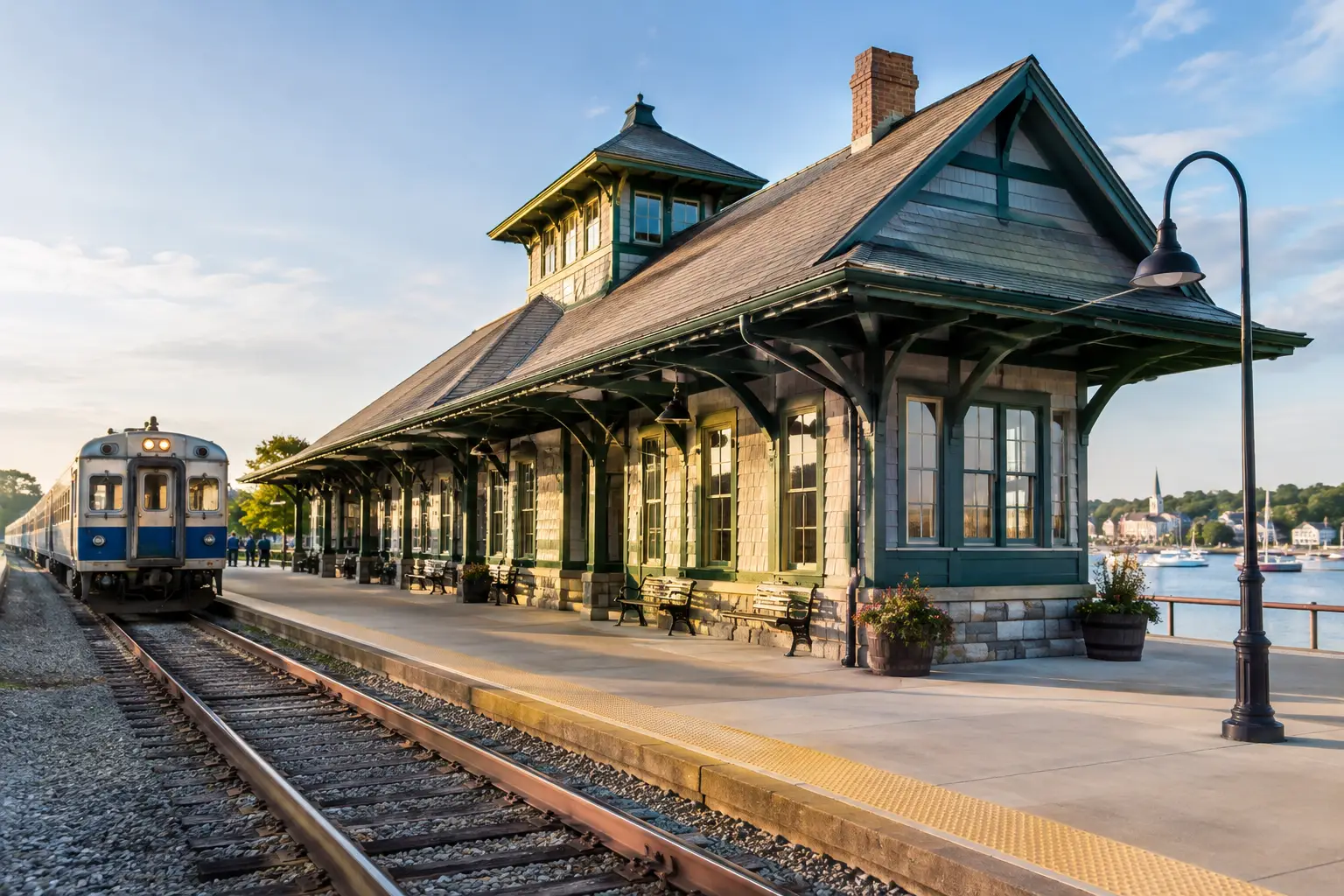
A train station is built for movement, but the best ones also give a town a reason to pause. In Mystic, historic station restoration has protected more than old brick, tall windows, and a familiar platform. It has kept a piece of everyday community life in service – a place where travelers arrive, neighbors meet, and the story of the shoreline remains visible.
The restored 1905 station is a reminder that preservation works best when a building still has a purpose. A depot should not feel sealed behind a rope or reserved only for special occasions. It should welcome someone hurrying to catch a train, a family looking for breakfast, a local stopping in for coffee, or a visitor hoping to experience the Mystic they have heard about.
Why Historic Station Restoration Matters
Old stations carry a particular kind of local memory. They were built around arrivals and departures, reunions and first jobs, weekday commutes and long-awaited vacations. Even when the schedules change and the town grows, the building can hold onto those human connections.
That is why restoring a station is different from simply renovating an old structure. The work calls for respect for original details, but it also requires honest choices about what a modern building needs. Heat, accessibility, food service, lighting, plumbing, safety systems, and reliable daily maintenance all matter. A building cannot serve its community for another century if it is only beautiful from the sidewalk.
In a town like Mystic, that balance is especially meaningful. Visitors come for maritime history, village streets, the river, and the feeling that there is still a real place behind the postcard. Local residents want the same thing, along with a dependable spot that fits naturally into their routines. A cared-for station can do both.
A Depot Needs a New Daily Purpose
Preservation is strongest when it is lived in. A station that remains active has people noticing a leaking window, appreciating the craftsmanship in the woodwork, sharing stories about the building, and bringing friends through the door. Daily use creates stewardship in a way that a vacant landmark rarely can.
At Mystic Depot Roasters, the station’s next chapter includes freshly roasted coffee, made-to-order breakfast and lunch, baked goods, familiar snacks, and the small comforts that make travel days easier. That kind of use does not compete with the history of the depot. It helps explain why the building deserves care.
There is a practical side, too. Adaptive reuse gives historic buildings an economic role in the present. Rather than relying only on occasional events or outside support, a busy café and gathering place can help keep a landmark open, maintained, and part of the local rhythm. The trade-off is that a working business needs room for equipment, storage, seating, and efficient service. Good restoration plans account for those needs without sanding away the building’s character.
Character Is More Than a Look
It is easy to reduce historic character to a few decorative details. But a meaningful restoration protects the feeling of the place as well as the visible materials. The scale of the rooms, the relationship to the tracks, the windows that bring in morning light, and the sense of anticipation around the platform all contribute to what makes a station feel like a station.
That does not mean every corner must be frozen in time. In fact, trying to recreate a past that never truly existed can make a building feel more like a set than a community landmark. Honest updates are often the better choice. New systems can be quietly modern. Accessible entrances can welcome more people. A food counter can sit comfortably alongside historic architecture when it is designed with care and proportion.
The goal is not perfection. The goal is continuity.
The Community Benefits of a Restored Station
A preserved depot gives residents and visitors a shared reference point. It makes directions easier, creates a natural meeting place, and offers a first impression that feels specific to Mystic rather than interchangeable with any other town along the rail line.
For rail passengers, a station café adds a simple but valuable convenience. There is time for a hot coffee before boarding, a breakfast sandwich for the ride, or a lunch after arrival. For commuters, the same stop can become part of a weekly routine. For hospitality workers, retirees, families, and day-trippers, it can be an easygoing place to sit down without needing a grand occasion.
Those everyday moments matter because they keep local history from becoming distant. A child who has breakfast in a former depot may ask about the tracks outside. A visitor waiting for a train may notice the age of the building and learn that it has served Mystic for generations. A regular may begin to see a familiar station not merely as a backdrop, but as something worth protecting.
There is also a civic benefit in keeping landmarks useful. When a town invests attention in a historic structure, it signals that its past has value and that its future does not have to erase it. That pride often reaches beyond one address. It encourages care for nearby storefronts, public spaces, sidewalks, and the local businesses that give a village center its life.
Historic Station Restoration Takes Ongoing Care
The restoration itself is only the beginning. Historic buildings ask for patience, close attention, and a willingness to handle the unglamorous work. Roofs need inspection. Old masonry needs appropriate repair. Wood trim needs protection from New England weather. Mechanical systems need updating before a small problem becomes a costly interruption.
There can be surprises, especially in buildings that have stood through more than a century of changing uses. Original materials may require specialized work. Modern code requirements can shape every decision. A repair that seems straightforward may take longer because the right approach is not always the fastest one.
That is part of the responsibility of caring for a landmark. Shortcuts can be tempting, particularly when budgets are tight, but the wrong materials or poorly planned changes can create problems that last for decades. Thoughtful preservation takes time because it considers what the building needs now and what it will need next.
For guests, much of this work may be invisible, and that is often a sign that it has been done well. The room feels welcoming. The doors work. The heat is on when the shoreline wind is sharp. The historic details remain part of the experience without getting in the way of a good meal, a friendly conversation, or a train to catch.
A Welcome That Carries the Story Forward
A restored station should never feel precious in the wrong way. Its history is not meant to make people feel they must whisper or hurry along. It should make the welcome warmer.
That is the real promise of historic station restoration: a beloved building can honor where a town has been while making room for the people who are here now. Stop in before the train, settle in over breakfast, bring an out-of-town guest, or simply take a moment to look up at the details that have watched Mystic change. The depot is still doing what it was built to do – bringing people together.
Follow For More
October 19, 2026
A Guide to Historic Station Dining in Mystic
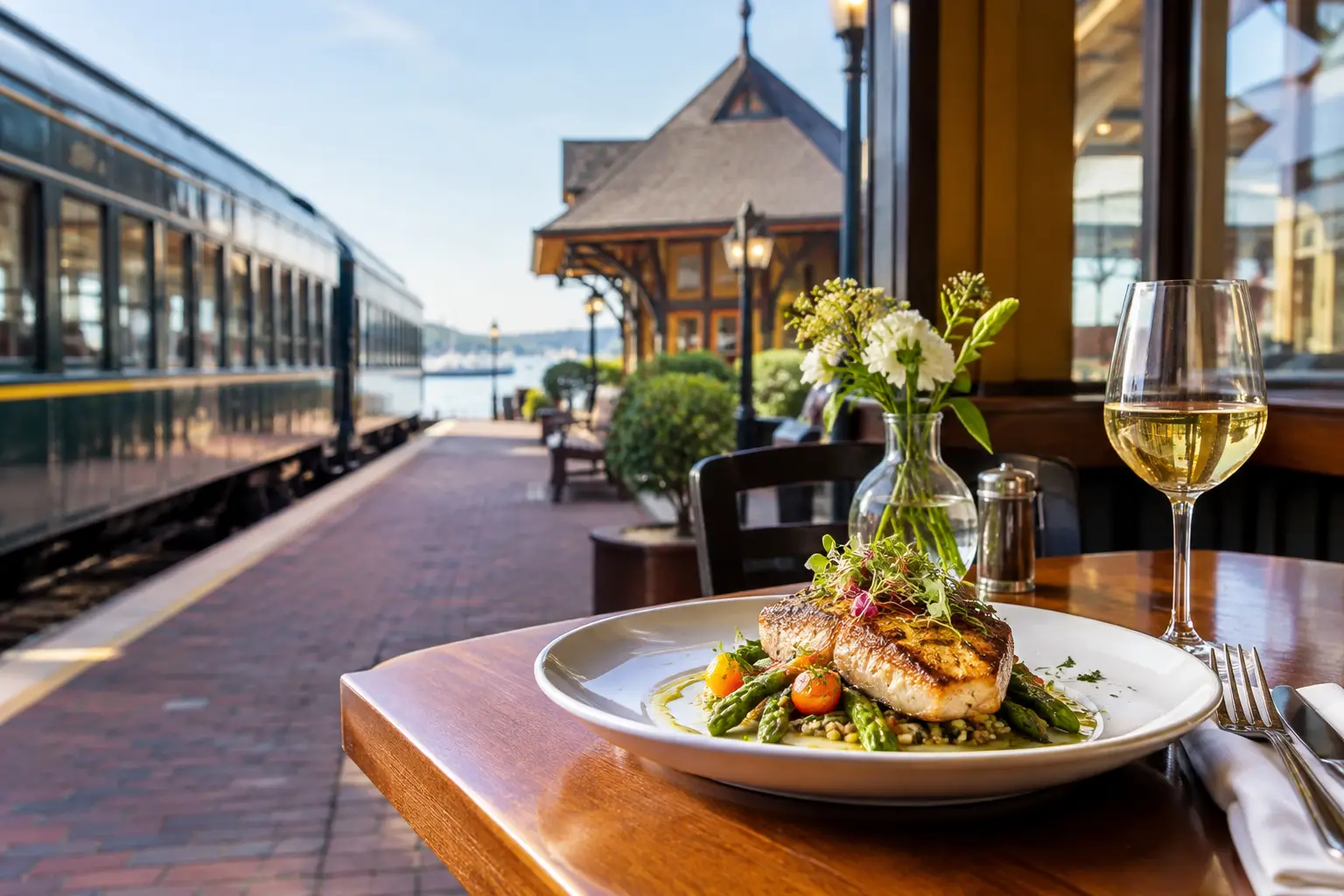
The best station meals have always done more than fill a gap between arrivals and departures. They offer a warm cup on a cold platform morning, a familiar sandwich before a long ride, and a place to settle in when a travel day runs ahead or behind schedule. This guide to historic station dining is for anyone who wants to enjoy that experience fully, whether you are catching an Amtrak train in Mystic, meeting a friend for breakfast, or building a little extra time into a shoreline day trip.
A restored depot has a rhythm all its own. The clock matters, but so does the creak of old floors, the view toward the tracks, and the feeling that generations of travelers have paused in the same place. Good station dining respects that history while making the practical parts easy: fresh food, good coffee, a welcoming table, and service that understands you may have a train to catch.
What Makes Historic Station Dining Different
Dining in a historic train station is not the same as grabbing food at a highway exit. A depot was built around movement and connection. People arrived with luggage, waited for loved ones, headed off to work, and came home again. When a station is restored as a café or restaurant, those layers of everyday life remain part of the experience.
That is why the setting matters. Original architectural details, high ceilings, old waiting-room proportions, and views of active rail lines can make an ordinary breakfast feel tied to a particular town. In Mystic, the station itself is part of the visit. The restored 1905 building is a local landmark, but it is also a working stop where commuters, visitors, and neighbors cross paths throughout the day.
The trade-off is that historic spaces were not designed around the expectations of a modern chain restaurant. Seating may feel more intimate. The building may have its own quirks. On a busy weekend or around a popular train time, the room can be lively. For many guests, that is exactly the point. You are not eating in a copy-and-paste dining room. You are spending time in a place with a real past and an active present.
Plan Your Station Meal Around the Day
The easiest way to enjoy a meal at a depot is to decide what role it plays in your plans. If you are traveling, think of it as part of the journey rather than an errand squeezed in before boarding. If you are visiting Mystic, let it be the comfortable starting point or landing place for the day.
Before a train: keep it simple and leave room for timing
Before departure, choose something satisfying that does not require you to watch the clock anxiously. A made-to-order breakfast sandwich, a pastry with coffee, or a lunch item you can take along can make the wait more pleasant without creating a rush.
Give yourself more time than you think you need. Train schedules can change, parking can take a few minutes, and a historic station is worth looking at rather than racing through. Arriving early also means you can order calmly, find your platform, and enjoy the small pleasures of travel that disappear when every minute is accounted for.
If you need to carry food onto the train, choose items that travel well and are easy to manage in a seat. Keep drinks secure, napkins handy, and your hands free when it is time to gather your bags. Convenience matters, but it does not have to mean settling for something forgettable.
After arrival: give yourself a soft landing
A station café is often most welcome just after a trip. Maybe you need a proper lunch after a morning of connections. Maybe you are meeting family who arrived from out of town. Maybe the weather has turned, and a warm drink is a better first stop than wandering straight into the next plan.
This is the time to slow down. Ask what is fresh from the kitchen or bakery, choose a table if one is available, and look around. A good post-train meal gives everyone a moment to reset before heading toward downtown Mystic, the waterfront, local shops, or home.
Make the depot part of a local day
For residents, historic station dining can be refreshingly ordinary in the best way. It is a place to begin a workday with coffee, meet a neighbor at lunch, pick up a treat, or bring visiting relatives somewhere that feels distinctly local. The landmark is special, but it does not need to be reserved for special occasions.
For visitors, pairing breakfast or lunch with a stroll through Mystic makes practical sense. Start with a meal near the tracks, then leave the car parked for a while and enjoy the town at walking pace. On the way back, a coffee, dessert, or small snack can turn the station into the final stop of the day rather than simply the place you pass through.
How to Order Well in a Historic Depot
The best order depends on your schedule, appetite, and company. There is no single right choice, but a few habits help. First, match your meal to your timing. If boarding is close, a quick coffee and baked good may be the wiser call. If you have an hour with a friend, a made-to-order breakfast or lunch is worth settling in for.
Second, let the menu do what a neighborhood menu should do: offer comfort and flexibility. Station dining works especially well when there is something for the early commuter, the hungry family, the person who wants a fresh sandwich, and the traveler looking for one excellent cup of coffee. Familiar food is not boring when it is prepared with care and served by people who are glad you came in.
At Mystic Depot Roasters, that balance is part of the welcome: specialty coffee alongside breakfast, lunch, fresh-baked goods, nostalgic snacks, and a few thoughtful gifts for the road. A station stop can be as quick as a coffee refill or as leisurely as a meal shared at the table.
If you are ordering for a group, keep the station setting in mind. Families may appreciate choosing a mix of dependable favorites and a sweet treat to share. Friends meeting between appointments may prefer coffee and lighter fare. Travelers with luggage will be grateful for an order that is easy to carry. The goal is not to make dining complicated. It is to let the meal fit the day you actually have.
The Small Details That Make the Experience Better
Historic station dining is at its best when guests and hosts both make room for a little neighborliness. If you are lingering at a table during a busy period, be mindful of people arriving from the platform. If you need to get moving, let the staff know you are working around a departure time. A little clear communication goes a long way.
It also helps to look up from the phone now and then. Notice the building materials, the old station layout, the activity outside, and the mix of people in the room. A commuter with a regular order, a family headed to a museum, and a couple beginning a weekend away may all be sharing the same space. That mix is part of the charm no modern food court can manufacture.
Do not overlook the retail shelf or bakery case, either. A locally meaningful gift, a nostalgic snack, or something sweet for later is a simple way to carry the visit beyond the station doors. These are not just last-minute purchases. They are the kinds of small things that make a trip feel remembered.
A Guide to Historic Station Dining With Respect for Place
The strongest historic station restaurants do not treat their building as a backdrop. They care for it as part of the community’s shared story. Preservation gives old depots a useful future, but that future depends on people using them: having breakfast before work, bringing a grandchild for a cookie, meeting a friend, or waiting for the train with a good cup in hand.
That is also why local support matters. Choosing an independent station café helps keep a landmark active and cared for. It supports the everyday hospitality that makes a town feel lived in rather than merely visited. The value is not only in the meal. It is in the fact that the lights are on, the coffee is brewing, and a historic gathering place still has people coming through its doors.
Next time you find yourself near the tracks, leave a little room in the schedule. Order something you will enjoy, settle into the station for a few minutes, and let the trip begin or end with the kind of welcome people have always hoped to find at a depot.
Follow For More
October 17, 2026
Why the Future of Station Cafes Feels Local

A train pulls into Mystic with a few minutes to spare. One passenger needs coffee before the next connection. Another wants a breakfast sandwich for the ride. A local on the way to work is hoping the person behind the counter already knows the order. That small, ordinary scene says a great deal about the future of station cafes: they will succeed by being useful to travelers and meaningful to the towns around them.
For generations, train stations were more than platforms and timetables. They were meeting points, first impressions, places for a quick bite, and landmarks people used to describe where they lived. The best station cafes can carry that role forward. Not by trying to make every depot look like the same polished coffee counter, but by giving each station back its own personality.
The Future of Station Cafes Is Built on Belonging
A station cafe has a built-in advantage over a typical roadside stop. People arrive there with a reason. They may be starting a trip, coming home, meeting a friend, waiting out a delay, or simply passing through a familiar part of town. Food and coffee matter, of course, but the setting creates a different kind of opportunity: a chance to make the wait feel worthwhile.
That means the next generation of station cafes cannot rely on convenience alone. Convenience gets someone through the door once. A warm welcome, a dependable meal, and a sense of place give them a reason to return.
For a traveler, that may mean a fresh cup of coffee that is ready without feeling rushed, plus a sandwich packed carefully enough to take on the train. For a neighbor, it may mean a comfortable table, a familiar face, and breakfast that feels like a treat without becoming an expensive production. The strongest cafes serve both needs without treating either customer as an interruption.
This is where historic stations have something modern retail spaces cannot easily copy. Their walls have stories. Their waiting rooms have seen arrivals, departures, celebrations, and goodbyes. When a cafe respects that history instead of covering it up, the building becomes part of the experience. A visitor gets a memorable stop. A local gets to see a cherished landmark living a useful life.
A Good Station Cafe Must Solve Real Problems
Romance is only half the picture. Travelers have practical needs, and they tend to need them quickly. The future of station cafes will be shaped by businesses that understand the difference between hurried service and impersonal service.
A commuter with two minutes before boarding needs a clear menu, a fast line, and food that travels well. A family visiting for the day may want a relaxed breakfast, a treat for the kids, and a place to regroup before exploring town. Someone arriving late in the afternoon might be grateful for a simple lunch, a cold drink, or a few snacks to bring along.
The menu has to work hard. Freshly roasted coffee is a natural anchor, but it should be supported by made-to-order breakfast, satisfying lunch options, baked goods, and practical grab-and-go choices. A station is not the place for a menu that demands a long explanation or leaves hungry passengers guessing what they can carry onto a train. Familiar food, made with care, often wins.
Reasonable pricing matters just as much. A station location should not become an excuse for captive-audience prices. Travelers remember being treated fairly. Locals notice, too. When a cafe offers quality food at a price that encourages regular visits, it earns a place in the weekly routine rather than becoming a once-a-year tourist stop.
There are trade-offs. A very large menu can appeal to more tastes, but it can slow service and make consistency harder. A tiny grab-and-go menu may move quickly, but it misses the chance to become a true gathering place. The sweet spot depends on the station, its passenger volume, nearby businesses, and the rhythms of the surrounding town. The guiding question is simple: what will make this stop more helpful today?
Speed should feel thoughtful
Technology will play a larger role, especially with online ordering, digital gift cards, and simple ways to reorder a favorite meal. These tools are helpful when they remove friction. A regular who can place an order ahead of a busy morning is likely to appreciate it.
But technology should not erase the human part of the experience. A screen cannot notice that a customer looks lost, recommend something for the ride, or welcome a returning visitor back to town. The best station cafes will use digital convenience behind the scenes while keeping hospitality front and center.
Historic Character Is More Than Decoration
There is a difference between a cafe with old photographs on the wall and a cafe that genuinely belongs in a historic station. The first may look pleasant. The second understands that preservation is an active form of hospitality.
Keeping original details visible, honoring the building’s architecture, and sharing its story give customers something real to connect with. This does not mean a business must become a museum. People still need comfortable seating, clean restrooms, reliable service, and room for strollers, luggage, and takeout orders. Preservation works best when the building remains alive and useful.
At Mystic Depot Roasters, a restored 1905 station offers a reminder of what this can look like. The setting is not a backdrop for coffee. It is part of the welcome, connecting a meal or a morning cup to a place that has long mattered to Mystic. That combination of heritage and everyday service is difficult to manufacture, which is exactly why it resonates.
As more communities look for ways to preserve landmark buildings, station cafes offer a practical answer. They invite people in often enough to keep a property active, visible, and cared for. They can also support local jobs, draw visitors beyond the usual attractions, and give residents another reason to take pride in the center of town.
The Neighborhood Makes the Difference
A station cafe cannot thrive on train passengers alone in every community. Schedules change. Seasonal travel rises and falls. Weather affects foot traffic. The businesses with staying power are woven into local life.
That can mean knowing the early-morning regulars, offering a reliable lunch for nearby workers, keeping a few nostalgic snacks on hand, and making room for friends to catch up. It can mean a gift card for a teacher, a baked good picked up after school, or a welcoming table for a retiree who enjoys seeing familiar faces. These moments may not sound dramatic, but they build loyalty one visit at a time.
Local partnerships matter, too. A station cafe can become a natural stop for hotel guests, museum visitors, tour groups, and people headed to the waterfront. Yet the relationship must feel mutual. Visitors should be encouraged to experience the town, and the cafe should reflect the character that brought them there in the first place.
This is also why standardization has limits. A chain can offer predictability, and predictability has value when a traveler is in a hurry. But a locally rooted cafe can offer context. It can tell someone where they are without needing a brochure. The coffee, food, building, and welcome can all say the same thing: you have arrived somewhere with a story.
What Travelers Will Remember
Most people will not remember every detail of a trip. They will remember whether the coffee was good, whether they found something satisfying to eat, and whether a brief stop made them feel cared for. In a historic station, those small kindnesses carry extra weight.
The future of station cafes is not about turning every depot into a destination restaurant, nor is it about reducing a beloved building to a vending stop. It is about finding the generous middle ground: fast enough for the train, comfortable enough for the neighborhood, and distinctive enough to be worth talking about after the trip is over.
For communities lucky enough to have a station and a story, the opportunity is right there on the platform. Keep the coffee fresh, the food honest, the welcome personal, and the doors open to both the person catching a train and the neighbor who simply came by to say hello.
Follow For More
October 15, 2026
7 Best Coffees for Train Travel, Chosen for the Ride
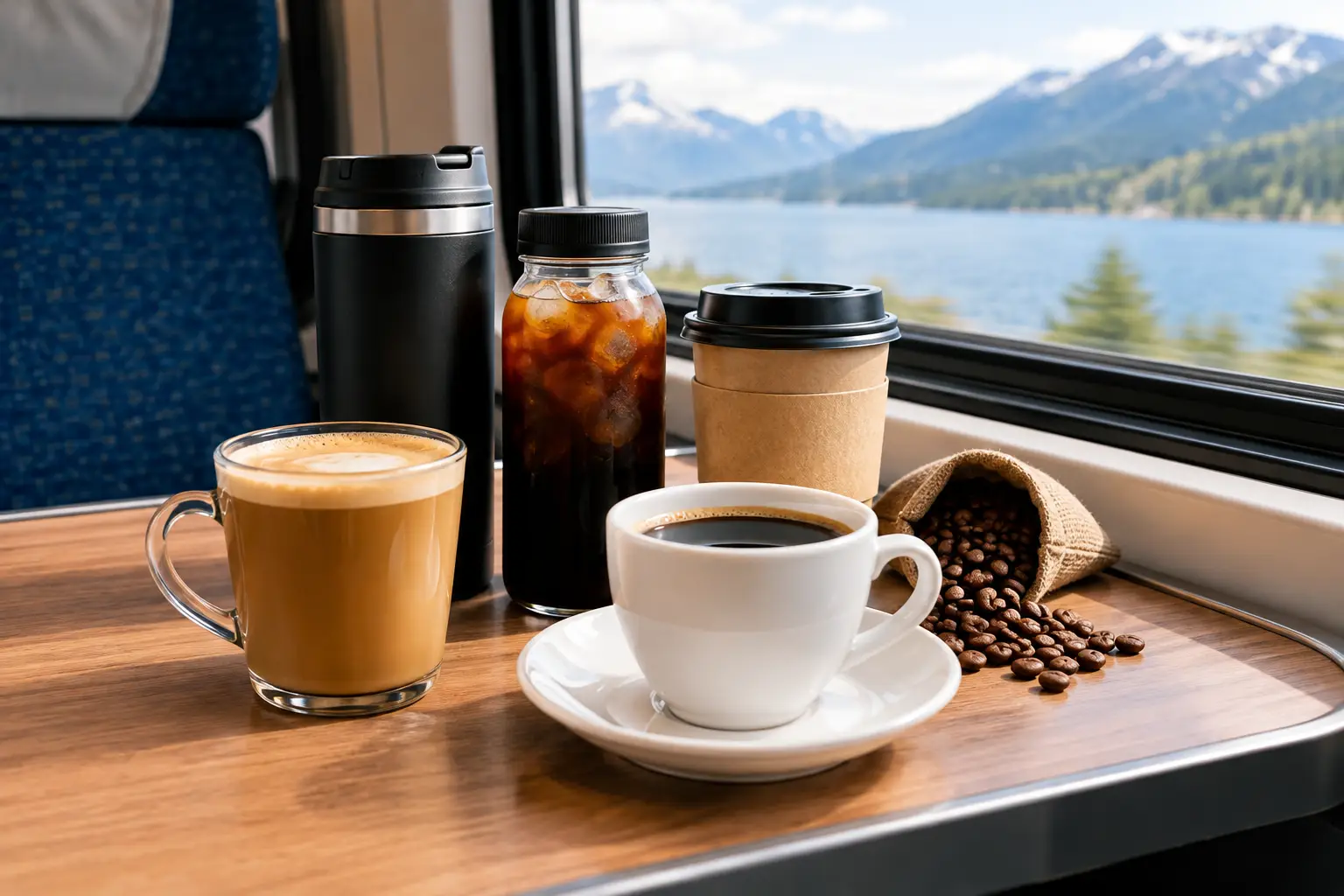
A train trip has its own rhythm: the early platform, the conductor’s call, the first stretch of shoreline or woods sliding past the window. The best coffees for train travel should fit that rhythm. They need to taste good without demanding much attention, travel safely in hand, and still feel like a small comfort after the train gets moving.
That is why the biggest coffee is not always the best coffee for a rail journey. A giant, extra-hot drink may sound sensible before a long ride, but it can be awkward in a crowded seat and disappointing by the time it cools. A well-chosen cup – made with the length of your trip, the time of day, and your own habits in mind – is the better companion.
What Makes Coffee Good for a Train Ride?
The right choice starts with temperature and timing. If you are boarding within a few minutes, a drink that can be sipped right away is usually more useful than one you must carry carefully while finding your seat. If you have a longer ride ahead, coffee that holds its flavor as it cools earns its place.
The lid matters, too. A secure lid is not glamorous, but it is a kindness to your fellow passengers and your favorite jacket. A cup with a small opening, rather than a wide uncovered top, is easier to manage when the train shifts, brakes, or rolls through a curve.
Finally, think about how coffee treats you when you are sitting for a while. A bright, strong espresso may be exactly right for a quick morning commute. For a two-hour ride after breakfast, a smooth medium roast or a milk-based drink may feel more balanced. There is no single winner for every traveler.
7 Best Coffees for Train Travel
1. Fresh medium-roast drip coffee
For most rail travelers, a fresh medium-roast drip coffee is the dependable choice. It is quick to order, easy to carry, and flavorful enough to enjoy black or with a little milk and sugar. A good medium roast offers familiar notes of caramel, toasted nuts, or chocolate without becoming too heavy or too sharp.
It is also a sensible choice when boarding time is tight. You can take a few sips on the platform, settle in, and still have a cup that tastes pleasant 20 or 30 minutes later. If your train ride is under two hours, this is often the coffee to beat.
2. An Americano for a clean, easy sip
An Americano gives espresso lovers a longer drink without the weight of a large latte. Espresso and hot water create a cup with a little more body and character than standard drip coffee, while still being easy to drink as the scenery rolls by.
Ask for room at the top if you plan to add milk, or leave it black if you want the flavor to stay clear as it cools. An Americano is particularly good for travelers who want a smaller cup that feels intentional rather than rushed.
3. Cold brew for warm platforms and afternoon rides
Cold brew is one of the best options when the weather is warm, the station is busy, or you know you will not finish your coffee immediately. Since it begins cold, there is no waiting for it to reach a drinkable temperature and no concern about a hot spill in a crowded aisle.
Its mellow, low-acid character can be especially welcome on an afternoon train. Keep in mind that cold brew can be stronger than it tastes. If caffeine makes you restless, choose a smaller size or add milk for a gentler ride.
4. Iced coffee when you want something familiar
Iced coffee is straightforward, refreshing, and easy to customize. It is a fine choice for travelers who like a brighter coffee flavor than cold brew usually offers, especially with a splash of milk or a touch of sweetener.
The trade-off is ice. On a longer trip, melting ice can water down the drink. For a short ride, that is rarely a problem. For a longer journey, cold brew or a smaller iced coffee you can finish early may be the better call.
5. A cappuccino for a short morning trip
A cappuccino is a lovely platform treat when your ride is brief and you plan to drink it soon. The espresso flavor comes through clearly, and the foamed milk makes it feel special without turning it into a large, heavy drink.
It is not the best pick for a cross-state trip. Foam settles, the drink cools quickly, and the balance changes. But for a quick ride into the city, a morning meeting, or a day out in Mystic, it brings a little café pleasure to the journey.
6. A latte for a gentler cup
A latte is often the right choice for travelers who find black coffee too intense on an empty stomach. The steamed milk softens the espresso and creates a smooth drink that pairs well with a pastry, breakfast sandwich, or a simple cookie tucked into your bag.
Choose a smaller latte if you need to walk the platform, handle luggage, and board in a hurry. It is satisfying, but it is best enjoyed within the first part of the ride. A latte left untouched until the last stop will not show off the coffee at its best.
7. Decaf coffee for the ride home
Not every train coffee needs to be a fuel stop. Decaf is a thoughtful choice for an evening return trip, a relaxed weekend outing, or anyone who wants the ritual of a warm cup without carrying caffeine into bedtime.
A freshly brewed decaf should taste like coffee, not a compromise. When it is roasted with care, you can still find sweetness, balance, and a pleasant finish. Pair it with something baked, watch the towns pass, and let the ride do what train travel does best: give the day a little breathing room.
Choosing the Right Size and Add-Ins
A 12-ounce cup is often the sweet spot for train travel. It is enough to enjoy without becoming a balancing act, and it is more likely to be finished while the coffee is still in its prime. Larger cups make sense for a long ride, but only if you have a secure place to set them down.
When it comes to add-ins, simpler usually travels better. Milk, cream, and a little sugar are easy. Tall piles of whipped cream, drizzles, and delicate toppings are best saved for a table. The goal is not to make coffee boring. It is to choose something that will arrive at your seat looking and tasting the way it should.
If you use a reusable travel mug, bring one with a leak-resistant lid and a shape that fits your bag’s side pocket or the train’s cup holder. It keeps coffee warmer, cuts down on waste, and makes boarding easier. Just leave enough time for it to be filled before your departure.
A Good Coffee Starts Before the Whistle
At a station, timing is part of hospitality. Give yourself a few extra minutes to order instead of racing for a cup as your train pulls in. That small cushion lets you choose what you really want, pick up a snack for later, and board without the feeling that your coffee is one more thing to manage.
At Mystic Depot Roasters, tucked inside the restored 1905 station, a fresh cup and a made-to-order breakfast can turn a practical departure into a proper send-off. Whether you are commuting, visiting for the day, or heading down the line to see family, coffee should make the trip feel more welcoming.
The best choice is the one that suits your route, your seat, and your day ahead. Take a sip before you board, keep the lid secure, and save a few quiet minutes for the view.
Follow For More
October 13, 2026
How to Order Coffee Without the Guesswork

A coffee order can be as simple as “a medium hot coffee, please” or as specific as a double espresso with oat milk and one pump of vanilla. The good news is that learning how to order coffee does not require a secret vocabulary. It simply means knowing what you enjoy, communicating the few details that matter, and asking when you are not sure.
At a friendly neighborhood café, there is no prize for ordering the most complicated drink on the board. The best order is the one that suits your morning, your taste, and the time you have before the train pulls in.
Start With the Kind of Coffee You Want
Before choosing a size, syrup, or milk, decide what you want your coffee to taste and feel like. Are you looking for a straightforward cup of brewed coffee? Something bold and concentrated? Or a warm, creamy espresso drink?
Brewed coffee is the familiar everyday choice. It is made by passing hot water through ground coffee and served by the cup. If you enjoy coffee black, take it with a splash of milk, or like to sweeten it yourself, this is usually the simplest place to begin. Ask what is brewing if you are curious. One roast may be lighter and brighter, while another may taste deeper, toastier, or more chocolatey.
Espresso is a small, concentrated shot of coffee with a fuller body and a stronger flavor. It is the foundation for many café favorites. A latte combines espresso with plenty of steamed milk for a smooth, mellow drink. A cappuccino has espresso, steamed milk, and a thicker layer of foam, so it often feels lighter but tastes more coffee-forward. An Americano is espresso with hot water, making it closer in volume to a regular cup of coffee while keeping espresso’s character.
If you want something chilled, iced coffee is typically brewed coffee served over ice, while an iced latte is espresso and cold milk over ice. Cold brew, when available, is steeped cold for a long time and is often smooth with lower perceived acidity. There is no universal winner here. It depends on whether you want a classic coffee flavor, creamy comfort, or a cold and refreshing pick-me-up.
How to Order Coffee Step by Step
A clear coffee order usually has four parts: the drink, the size, the temperature, and any changes you would like. You can say them in nearly any order, but this format keeps things easy for both you and the person taking your order.
For example: “Could I have a small hot latte with whole milk?” Or: “I’ll have a large iced coffee with a little cream and two sugars.” That is all you need.
If you are ordering espresso, you may also hear the word “shot.” Most lattes and cappuccinos start with espresso, and the number of shots can often be adjusted. One shot has a gentler coffee flavor and less caffeine than two. A double shot has more intensity, though caffeine levels can vary by bean and preparation. If you like your latte to taste more like coffee than milk, asking for an extra shot is a sensible choice.
Do not worry if a café uses different names for sizes. A small, medium, and large are perfectly clear requests. If the menu uses its own terms, staff will happily translate. When you are standing at the counter with a suitcase by your side or a busy morning ahead, plain language works just fine.
Choose Your Milk
Milk changes both the flavor and texture of an espresso drink. Whole milk gives a richer, rounder feel. Skim milk is lighter. Oat milk is naturally a little sweet and creamy, while almond milk has a nuttier taste and a thinner texture. Soy milk can be a dependable choice for those who prefer it.
Not every non-dairy milk steams exactly like dairy milk, and some pair better with particular drinks. Oat milk is a popular match for hot and iced lattes because it tends to feel especially smooth. Still, preference is personal. If you have an allergy, dietary need, or concern about cross-contact, mention it clearly when ordering so the café can guide you appropriately.
Add Sweetness With Intention
Sugar, honey, flavored syrups, and sauces can turn a coffee into a treat, but a little goes a long way. If you are unsure, start modestly. You can usually add more sweetness, but it is difficult to take it back once it is stirred in.
Try asking for one pump of vanilla or caramel in a medium latte rather than assuming the standard amount will suit you. For brewed coffee, you might begin with one sugar and a splash of cream. Over time, you will learn the balance you like. Many regulars find that as they get used to good, freshly roasted coffee, they need less sweetness to enjoy it.
A Few Useful Coffee Words, Plainly Explained
Café language can sound fancier than it is. “Decaf” means most of the caffeine has been removed, though it is not always completely caffeine-free. “Half-caf” means a mix of regular and decaf coffee or espresso. “Extra hot” asks for a hotter-than-usual drink, though very hot milk can change the flavor and make a cup harder to enjoy right away.
“Wet” and “dry” are terms you may hear with cappuccinos. A wet cappuccino has more steamed milk and less foam. A dry cappuccino has more foam and less liquid milk. These are useful distinctions if you already know what you prefer, but you never need to use them just to sound like a coffee expert.
“On the rocks” simply means over ice. “No foam” means exactly that. “Light ice” gives you less ice, but keep in mind that it can mean more room for the drink itself or a different balance as the beverage warms. Asking questions is always more useful than guessing.
Order for the Moment You Are In
The right drink at 7:15 in the morning may not be the right drink for an afternoon walk around Mystic. A hot drip coffee is quick, familiar, and easy to carry to the platform. An iced coffee can be a welcome companion on a warm day by the water. A latte may be the better choice when you want something comforting to enjoy alongside breakfast or a fresh-baked treat.
Timing matters, too. Espresso drinks take a little more preparation than poured coffee, especially during a busy rush. If your train is due soon, let the team know. A good café wants to help you get where you are going with a satisfying cup in hand, not a last-minute scramble.
If caffeine affects your sleep, consider decaf later in the day or choose a smaller size. If you have not eaten, a strong coffee on an empty stomach may feel different than it does after breakfast. Coffee is a daily ritual, but it is also personal. Give yourself permission to adjust it to how you feel.
Let Your First Order Be a Starting Point
A first coffee order does not need to be perfect. Try a medium hot latte with your preferred milk, a regular brewed coffee with cream, or an iced coffee with a touch of sweetness. Then notice what you would change next time: more coffee flavor, less syrup, a different milk, or no sweetener at all.
At Mystic Depot Roasters, the best kind of coffee order is one that feels easy – whether you are a local on your usual morning stop, a family taking a break from sightseeing, or a traveler with a ticket in hand. Start with what sounds good, speak plainly, and let your next cup teach you a little more about your own taste.
Follow For More
October 11, 2026
How to Plan Train Breakfast Without the Rush

A train departure has a way of making every minute feel shorter. You may have packed the night before, checked your ticket twice, and still find yourself wondering whether there is time for coffee, something warm to eat, and a proper goodbye to the morning. Knowing how to plan train breakfast means giving yourself a little breathing room before the platform call, not settling for a granola bar eaten while searching for your gate.
For travelers leaving Mystic, breakfast can be part of the outing rather than one more task to squeeze in. A good plan comes down to three things: knowing your train time, choosing food that fits the trip ahead, and allowing enough time to enjoy the station without watching the clock every ten seconds.
Start With the Train, Not the Breakfast
Build your breakfast plan backward from the scheduled departure, not from the time you hope to leave home. Train travel is usually more relaxed than flying, but that does not mean the schedule is optional. Give yourself time to park or be dropped off, gather bags, find the platform, and account for the occasional last-minute wrinkle.
For a simple morning trip with one small bag, arriving at the station 20 to 30 minutes before departure is often comfortable. If you are traveling with children, meeting someone, managing larger luggage, or visiting Mystic for the first time, aim for 40 to 45 minutes. That extra cushion is what turns breakfast from a hurried transaction into a pleasant start to the day.
Once you know when you need to be on the platform, work backward another 20 or 30 minutes for eating. A sit-down breakfast deserves more time than a coffee and baked good to go. The right choice depends on your itinerary. A long ride may call for a more substantial meal, while a short commuter trip may only need coffee and a small bite.
How to Plan Train Breakfast Around Your Schedule
The earliest train of the day requires a different approach from a late-morning departure. Early travelers tend to need speed and predictability. Choose an order you know you will enjoy, keep the morning routine simple, and avoid trying to do one final errand on the way to the station.
For a later departure, breakfast can become part of a fuller Mystic morning. This is especially nice for visitors staying nearby, families beginning a day trip, or locals seeing friends off. You can enjoy a made-to-order meal, refill your coffee, and take in the wonderful details of the old station before traveling on.
It also helps to check the day before for service changes, especially around holidays, winter weather, and busy summer weekends. A delayed train may give you more time than expected, but do not count on it. Plan for the published departure and consider any extra time a welcome bonus.
If You Are Taking Breakfast Onto the Train
Food for the train should travel well. Think about how it will be handled once you are carrying a bag, ticket, phone, and coffee. A breakfast sandwich, muffin, bagel, or other neatly wrapped item is usually easier to manage than a meal that needs a knife and fork.
If your ride is longer, pack a second small snack for later. Rail travel has its own rhythm, and hunger can show up somewhere between stations when the breakfast you had at dawn feels like a distant memory. A piece of fruit, trail mix, crackers, or a cookie can make the ride more comfortable without taking up much room.
Coffee deserves a little planning, too. A secure lid is essential, and a less-than-full cup is often wiser if you will be navigating stairs, doors, or a moving train. If you prefer to settle in first, bring water for the platform and pick up coffee once you are seated, when that is an option. There is no single right answer – just choose the one that makes the morning feel easier.
Choose a Breakfast That Matches the Journey
A breakfast before a two-hour ride should feel different from one before a full day of connections. The goal is not to eat the biggest possible meal. It is to stay comfortably fueled without feeling weighed down while traveling.
If you have a long ride ahead, look for a balance of protein and carbohydrates. Eggs, cheese, yogurt, nut butter, or a breakfast sandwich can give your morning more staying power than pastry alone. Pair it with fruit or something lightly sweet if that is your preference. If you are prone to motion sickness or simply do not love eating heavily before travel, a smaller breakfast plus a packed snack may be the better choice.
For families, avoid making breakfast another negotiation at the platform. Let children choose from two or three options before you leave home. A familiar baked good, fruit, or simple sandwich tends to travel better than something new and messy. Bring napkins, water, and one extra snack more than you think you need. That little bit of preparation is often the difference between a smooth boarding and a stressful one.
Travelers with dietary needs should plan ahead rather than assume every station stop will have the right fit. Carry a dependable backup snack if you have allergies, need gluten-free choices, or follow a specific eating plan. It is a practical kindness to yourself, particularly if a connection runs late.
Make the Station Stop Part of the Experience
Some stations are simply places to pass through. Others hold the feeling of a town. Mystic’s restored 1905 depot is the kind of place where the trip can begin before the train arrives: old brick, the movement of travelers, the sound of a train in the distance, and a cup of coffee warming your hands.
At Mystic Depot Roasters, breakfast and rail travel naturally belong together. A made-to-order breakfast, fresh-baked treat, or carefully roasted coffee can be enjoyed at a table when time allows or packed for the journey ahead. The setting matters, but so does the practicality of being right at the station when it is time to board.
If you are visiting Mystic, resist the urge to schedule every minute. Leave room for that station stop. It is one of those small travel moments that often becomes the part people remember: sitting down together before the miles begin, watching the platform wake up, and starting the day somewhere with real local character.
Use a Simple Night-Before Routine
The best train breakfast plans are made before anyone is hungry. Put tickets, identification, chargers, and any medications in the same bag the night before. Choose your breakfast plan, set out a travel mug if you use one, and decide whether you will eat at the station or carry food aboard.
A few small preparations can prevent the usual morning scramble:
- Check the train number, departure time, and station location one last time.
- Set an arrival goal that includes time to eat, not merely time to board.
- Pack water, napkins, and a backup snack with your travel essentials.
- Dress with one hand free for luggage, coffee, or a child’s hand on the platform.
This is not about making travel fussy. It is about protecting the easy, enjoyable part of the morning from being crowded out by logistics.
Leave Room for the Unexpected
Even a well-planned rail morning can shift. Traffic can slow down, a child can need an extra bathroom stop, or a train can be running behind. The answer is not to skip breakfast altogether. It is to have a flexible version of the plan.
If time gets tight, switch from a seated meal to something portable. If you arrive early, enjoy your coffee at a table instead of in a hurry. If the train is delayed, do not let the wait spoil the mood. Use the time to eat, stretch, charge your phone, or simply look around. Travel asks us to be ready for changes, but it can still feel unhurried.
A good train breakfast does more than fill the time before departure. It gives the day a welcoming first chapter: a warm cup, a satisfying bite, and a few calm minutes before the rails carry you onward.
Follow For More
October 9, 2026
Why a Station Cafe Atmosphere Feels Like Home

A station cafe atmosphere is more than a good cup of coffee near the tracks. It is the small comfort of walking into a place with a little history in its walls, something fresh being made in the kitchen, and a familiar welcome waiting at the counter. For travelers, it can make a connection or an early departure feel less hurried. For neighbors, it can turn an ordinary weekday into a reason to sit down, catch up, and stay awhile.
A Station Was Always Meant to Bring People Together
Long before stations became places to pass through quickly, they were community landmarks. People arrived with bags in hand, saw friends off, waited for news, and watched their hometown move through the day. A restored station still holds that feeling. There is a natural sense of occasion in the old architecture, the platform beyond the window, and the occasional sound of a train pulling in.
That is what gives a café in a station its particular charm. It has energy, but not the anonymous feeling of a busy highway stop. One table may hold a family beginning a Mystic weekend. Another may belong to a commuter checking the time between sips of coffee. At the next table, local friends may be settling in over breakfast as they have done for years.
The room does not need to manufacture a story. The building already has one. In a place like Mystic, where history and harbor-town life are part of the everyday landscape, that history makes a simple meal feel connected to something larger.
What Creates a True Station Cafe Atmosphere
The best station café atmosphere comes from a balance of movement and ease. There should be enough activity to make the room feel alive: orders called out, pastries coming from the case, guests arriving from the platform, regulars greeted by name. But there should also be room to exhale.
Fresh coffee helps set that tone right away. Its aroma reaches the door before the first conversation begins, offering travelers a welcome reset and locals a dependable start to the morning. A carefully prepared breakfast or a made-to-order sandwich matters just as much. Food gives people a reason to linger, rather than simply grab a drink and move on.
Then there are the details that cannot be copied from a chain café playbook: original architectural character, a view toward the rails, old station proportions, and staff who understand that a guest with ten minutes before boarding needs a different kind of help than a family enjoying a slow Saturday. Hospitality has to be practical as well as warm.
The Comfort of Something Familiar
Historic surroundings are memorable, but familiarity is what brings people back. A regular may have a usual coffee, a favorite breakfast, or a preferred seat when one is available. A visitor may not know the room yet, but they can still recognize the feeling of a friendly café where the menu is approachable and no one is trying too hard.
That combination matters. Travelers appreciate a place that feels distinctly local without feeling confusing or exclusive. Families appreciate choices that work for different appetites. Nearby workers appreciate knowing they can get a satisfying breakfast or lunch without making the meal a major event. The goal is not formality. It is the kind of dependable care that makes people comfortable coming in exactly as they are.
Why History Makes the Coffee Taste Better
Coffee does not literally taste different because it is served inside a historic depot. But context changes how we experience it. A warm drink in a plain waiting area is useful. The same drink at a table inside a building that has welcomed generations of passengers can become part of a memory.
That is especially true when the preservation is genuine. Restoring an old station is not about making it look like a themed restaurant. It is about respecting what was there, then giving it a useful new role in town life. A well-loved building stays alive because people use it: they meet there, eat there, bring guests there, and make it part of their routines.
Mystic Depot Roasters, inside the restored 1905 Mystic Amtrak station, is built around that idea. The depot remains a place of arrivals and departures, while also serving as an all-day gathering place for the people who call this corner of the shoreline home. The building’s past is present, but the welcome is very much for today.
A Good Stop Works on Different Timetables
A station café has to serve several kinds of days at once. Someone catching a train may need coffee and breakfast without delay. A visitor arriving in town may want a relaxed first meal and a chance to get their bearings. A local on a lunch break may want something fresh, fairly priced, and quick enough to fit the schedule.
Those needs can pull in different directions. Speed is essential near a platform, but no one wants to feel rushed once they have found a seat. A broad menu is helpful, but it should not make ordering feel complicated. Historic character is a strength, but comfort still matters: good food, welcoming service, and the simple reassurance that there is something for everyone.
When a café gets that balance right, it becomes useful in the best possible way. It is where a traveler picks up a pastry before boarding, where a grandparent meets a child after school, where a neighbor takes home a sandwich after a long day, and where a day-tripper finds a little taste of the town before exploring further.
The Value of a Place That Is Not Interchangeable
Many coffee shops can make a latte. Many restaurants can serve breakfast. What is harder to find is a place that could only exist where it does. A station café belongs to its town because its daily rhythm is shaped by the people passing through and the people who never plan to leave.
That local character should never be an excuse for inconsistency. In fact, it raises the standard. When customers return often, they notice whether the coffee is fresh, whether the baked goods are tempting, whether the breakfast arrives as expected, and whether they are treated with care. Personal service is not a slogan when the staff remembers a familiar face or takes an extra moment to help a visitor decide what to try.
There is also a quiet civic value in these places. A thriving station café keeps a historic building active, gives travelers a warm first impression, and provides a meeting spot that does not require a special occasion. It helps make the station part of community life rather than just infrastructure.
Make Time for the Stop
The real pleasure of a station café is that it meets people where they are. Some days, that means a coffee handed over with a smile and just enough time to reach the platform. Other days, it means sitting with a breakfast plate, watching the comings and goings, and letting the schedule wait a few more minutes.
Next time you are near the station, give yourself permission to make the stop part of the day. Order what sounds good, notice the old details around you, and enjoy the rare kind of café that makes both regular routines and new adventures feel a little more welcoming.
Follow For More
October 7, 2026
Amtrak Station Food Options in Mystic, CT
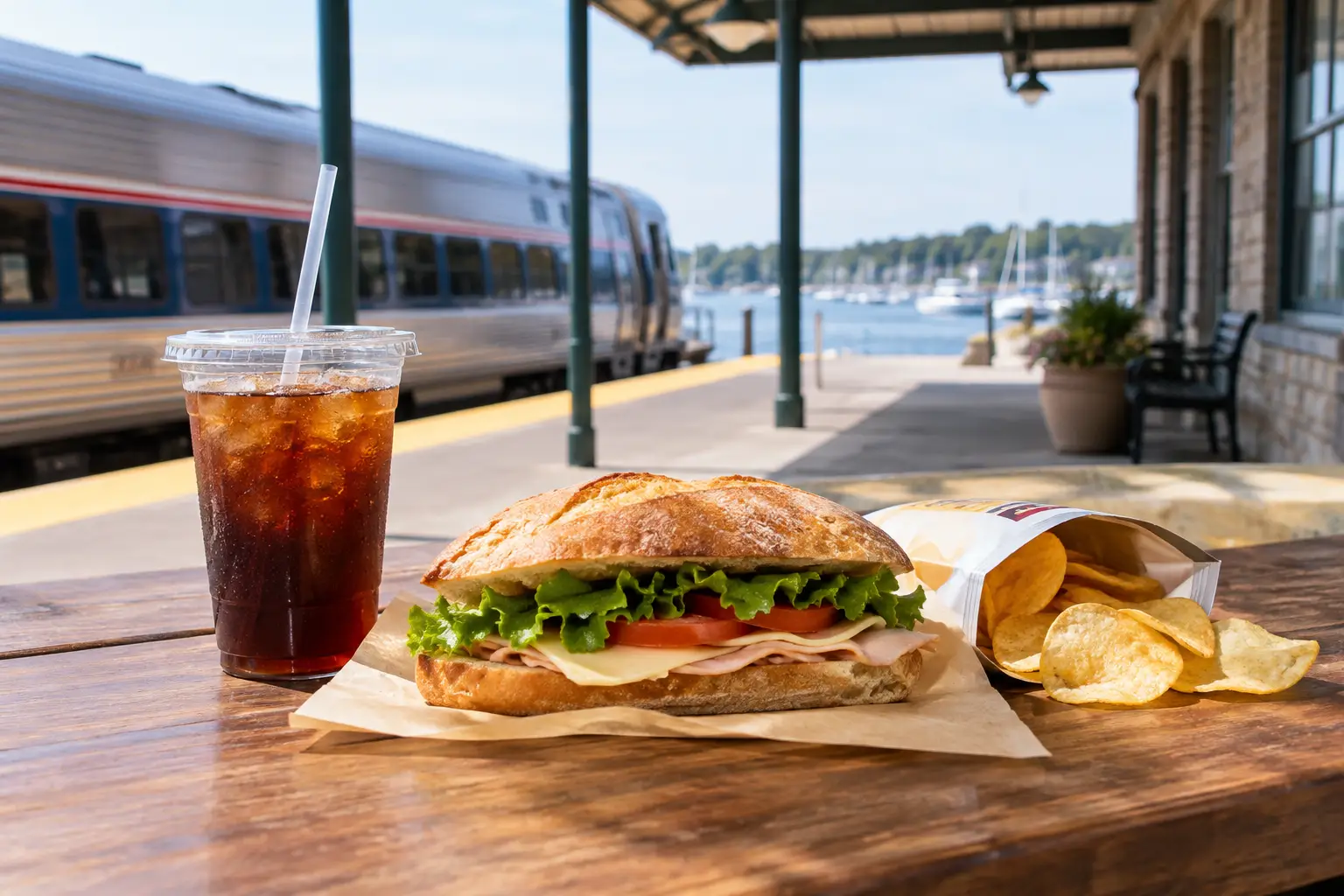
A train stop can be a rushed five minutes with a vending machine, or it can be part of the day you remember. For travelers looking into Amtrak station food options, Mystic offers something more welcoming: a chance to settle into a restored 1905 depot, enjoy a proper cup of coffee, and pick up a meal made for the trip ahead.
Whether you are catching an early train, arriving hungry after a long ride, or meeting someone at the platform, planning food around your schedule makes travel much easier. In Mystic, the station is not simply a place to wait. It is part of the experience.
What to Expect From Amtrak Station Food Options
Food at Amtrak stations varies widely. Large terminals may have several fast-casual counters, newsstands, bars, and sit-down restaurants. Smaller stations can be far more limited, particularly outside peak travel hours. A few have vending machines or nearby convenience stores. Others have no food service in the building at all.
That is why it pays to look beyond the station directory before you travel. A nearby café may offer fresher food, better coffee, and a calmer place to sit than what is available on the platform. It can also make the difference between boarding with a satisfying breakfast and settling for whatever happens to be left in your bag.
Mystic is especially well suited to the traveler who wants both convenience and a sense of place. The train station sits close to the village, and the historic depot itself has a food-and-coffee destination built right into its story.
Food at the Mystic Amtrak Station
Inside the restored station, Mystic Depot Roasters serves travelers, neighbors, and visitors throughout the day with specialty coffee, made-to-order breakfast and lunch, fresh-baked goods, desserts, nostalgic snacks, and gift items. It is the kind of stop that works just as well for a quick takeout order as it does for an unhurried meal before a day in town.
For early departures, a hot coffee and breakfast can be a welcome alternative to beginning the ride empty-handed. For midday travelers, sandwiches and lunch options are easy to carry onto the train. Baked goods and snacks are useful for the in-between moments: a delayed connection, a late-afternoon ride home, or the point when the café car feels a little too far away.
The setting matters, too. The depot has welcomed rail passengers for more than a century. Its restoration keeps that history in view while making room for the everyday comforts travelers actually need: a friendly greeting, a familiar order, and food prepared with care.
Breakfast before an early departure
Morning trains do not always leave much room for a leisurely restaurant stop. The smartest plan is to arrive with enough time to order, eat if you would like to, and still reach the platform without watching the tracks nervously.
A breakfast sandwich, pastry, or other portable breakfast item travels well. If you have a longer ride ahead, pairing it with fruit, a baked good, or an extra snack can help you avoid an expensive or limited onboard purchase later. Coffee is equally practical, but use a secure lid and give yourself a moment to stow it before boarding.
If your morning is tight, consider ordering ahead when that option is available. A pickup plan is especially helpful for commuters and families getting everyone out the door on time.
Lunch and takeout for the train
Lunch is where local station food can feel like a real upgrade. A freshly made sandwich is easier to eat in a coach seat than many messy restaurant meals, and it holds up better than overly delicate food. Choose something that travels neatly, then add a cookie, chips, or another snack for later.
For families, it is often easier to put together a small train picnic before boarding than to rely on everybody wanting the same thing from the café car. A sandwich for each traveler, a shared baked good, and a few drinks can turn a long ride into a more relaxed outing.
There is a trade-off, of course. If your trip is short, you may prefer to eat at the station and board light. If you are traveling for several hours, a portable meal and a second snack are usually worth carrying along.
How Much Time Should You Allow?
The right arrival time depends on your ticket, your luggage, your party size, and whether you are ordering food. Amtrak travel does not always follow the same routine as airport travel, but trains can arrive quickly and boarding announcements may come with little fanfare at smaller stations.
A good rule is to separate your food time from your platform time. If you want to sit down for breakfast or lunch, build in a comfortable cushion rather than treating the café as a last-second errand. If you only need coffee and a takeaway item, arriving a little earlier than usual gives you breathing room without turning the stop into a scramble.
Keep an eye on your train status, especially in winter weather or during busy travel periods. Delays may mean you have extra time for a meal, but they can also change the rhythm of the day. Having a café in the station is a genuine convenience when plans shift.
Smart Choices for Different Kinds of Travelers
Commuters often want speed and consistency. A coffee, breakfast item, or familiar lunch that can be picked up quickly makes the station part of a reliable routine. Visitors may have more time and may appreciate starting their Mystic visit in a building with real local history rather than a generic chain counter.
Traveling with children calls for simple, shareable food and a few extras for the ride. Bringing one more snack than you think you need is rarely a mistake. Retirees and travelers with accessibility concerns may prefer to arrive early, choose a seat, and avoid carrying a complicated meal through the station and onto the train.
Hospitality workers, day-trippers, and anyone headed to the shoreline for the afternoon may simply need something dependable before the next stop. That is where a station café earns its place: good food, reasonable choices, and service that understands people have somewhere to be.
A Few Practical Tips for Station Dining
Check operating hours before relying on any station food option, particularly on weekends, holidays, and during seasonal changes. Smaller stations do not always keep the hours of a major city terminal. If you have dietary needs, ask before ordering and choose items that can travel comfortably.
Bring a refillable water bottle when possible, and pack napkins for the train. Avoid meals that require a knife and fork unless you plan to eat before boarding. If you are carrying coffee, soups, or anything hot, leave one hand free for your bag and the railings.
Most of all, do not wait until you are already on the platform to think about food. The best station meal is one that fits your train time, your appetite, and the kind of trip you hope to have.
Before your next Mystic departure, give yourself a few extra minutes inside the old depot. You may board with a warm coffee, a well-packed lunch, and the pleasant feeling that your trip began before the train ever pulled in.